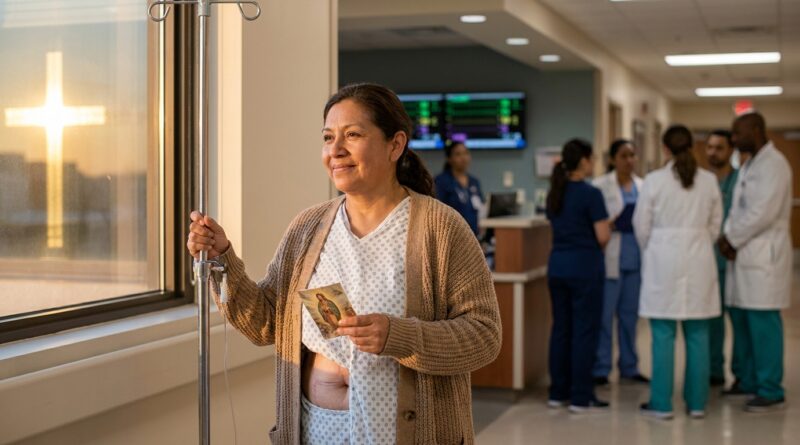
The Woman Who Outlived Her Own Cancer Prognosis: Inside a ‘God Gave Me Peace’ Miracle of Faith and Medicine
Some miracles do not happen in a flash. They happen in waiting rooms, in sleepless nights, in second opinions, and in the quiet moment after a doctor says something you never wanted to hear. If you have ever sat with a loved one after words like “aggressive,” “advanced,” or “inoperable,” you know how quickly the room can go cold. You also know the question that rises right behind the fear. Does faith still matter when medicine looks grim?
This kind of story matters because it meets people where many actually live, not on a mountaintop, but in the long middle. A woman was given a prognosis that seemed to write the ending for her. Instead, she kept walking through treatment, scans, setbacks, prayer, and the strange calm she described as, “God gave me peace.” She did not reject medicine. She went straight through it. And somehow, over time, she outlived what the charts suggested, becoming a living picture of faith and medicine working side by side.
⚡ In a Hurry? Key Takeaways
- This is a modern miracle cancer recovery story of faith and medicine, where peace, treatment, and persistence mattered together.
- If you are facing a scary diagnosis, ask questions, get a second opinion, and let prayer support you through each medical step.
- Stories like this should inspire hope, not replace professional care. Faith is not the opposite of treatment.
When the Prognosis Looks Final, But the Story Is Not
There is a certain kind of pain that comes with a cancer prognosis. It is not just physical. It is the feeling that your future has suddenly been reduced to percentages, timelines, and carefully chosen words from a doctor trying not to crush you.
That is why this woman’s story lands so deeply. She was not rescued from a burning car. She did not walk away from a cliff fall. Her miracle unfolded in a much more familiar place. Clinics. Test results. Treatment plans. Follow-up visits.
And in the middle of all that, she says she received something many people beg for before they ever ask for healing. Peace.
Not denial. Not magical thinking. Peace.
“God Gave Me Peace” Was Not a Shortcut Around Reality
That phrase can sound simple until you put it next to a hard diagnosis. Then it becomes something stronger. In stories like this, peace is not pretending the cancer is not there. It is the ability to keep breathing, keep showing up, keep deciding that fear does not get the final word.
For many believers, that is miracle number one.
The woman at the center of this story appears to have experienced that deep inner steadiness before the medical outcome ever changed. That matters. A lot. Because many people think faith only “counts” if it produces instant healing. But often, faith first changes how a person walks through the fire.
Peace can be part of the healing story
Sometimes the first answer to prayer is not a clean scan. Sometimes it is enough calm to make the next phone call, attend the next appointment, and hear the next doctor clearly.
That kind of peace does not make medicine unnecessary. It makes people strong enough to keep using it.
Faith and Medicine Were Not Fighting Each Other
One reason this modern miracle cancer recovery story faith and medicine angle feels so grounding is that it avoids a false choice. The woman did not have to pick between prayer and doctors, or between trust in God and trust in treatment.
She appears to have used both.
That is often how real healing stories work. Prayer can carry someone emotionally and spiritually. Doctors can diagnose, monitor, operate, adjust medication, and spot changes that would otherwise be missed. Family and church can help with meals, rides, and hope. None of that cancels out the rest.
It works as a mix.
For readers who have quietly wondered whether going to specialists means they are “not trusting God enough,” this kind of testimony is a relief. It says something healthy and honest. God can work through a surgeon’s hands, a wise oncologist, a better treatment plan, or a second opinion that changes everything.
Second opinions are not lack of faith
They are often wisdom.
When a diagnosis is severe, asking another expert to review the scans or pathology can be one of the most practical steps a patient takes. It does not mean panic. It means you want the clearest possible picture.
Why Long-Haul Miracles Hit Differently
Quick rescue stories are dramatic. They grab you by the collar. But a long-haul healing story sits beside people in a different way. It meets the woman waiting for her biopsy call. The husband driving his wife to radiation. The adult child pretending to be calm in the parking lot before going inside.
Long-haul miracles are less cinematic. They are often more useful.
They show that hope can survive a bad report. They show that peace can coexist with pain. They show that healing may come through a process that is messy, slow, and medical.
If you have ever been helped by stories where the impossible happened overnight, you may also appreciate The Girl Whose Tumor Vanished Overnight: Inside a Modern ‘Doctors Can’t Explain It’ Miracle. But this story speaks to the people whose miracle did not come overnight. It came one appointment at a time.
What This Story Says to People Living Between Scans
Most cancer stories are not lived at the moment of diagnosis alone. They are lived in the weeks after. Then the months. Then the follow-up season, when every ache feels suspicious and every scan date starts haunting the calendar.
That is where this woman’s testimony offers real comfort.
She outlived what she was told to expect. That does not happen in every case, and pretending otherwise would be unfair. But when it does happen, it reminds us that prognosis is not prophecy.
Doctors use the best information they have. They should. But they are still working with patterns, probabilities, and what is visible at the time. Human beings are not spreadsheets.
Hope needs honesty to stay strong
False promises help no one. Honest hope does.
Honest hope says, “This is serious.”
It also says, “We are not done yet.”
Practical Lessons Readers Can Take From Her Story
Even if your situation is not identical, there are a few grounded takeaways here.
1. Use your support system early
Do not wait until you are exhausted to let people help. Let friends pray. Let family drive. Let someone sit with you at appointments and take notes.
2. Ask clear medical questions
When emotions are high, details blur fast. Write down your questions. Ask what the scan means, what the options are, what the goal of treatment is, and what signs should trigger a call.
3. Make room for spiritual care too
Prayer, Scripture, counseling, church support, and quiet time with God can steady a person in ways medicine alone cannot. That does not replace treatment. It helps you carry it.
4. Do not assume the first timeline is the only possible one
Some prognoses are painfully accurate. Others are not. Treatments improve. Bodies respond differently. New doctors may see new options. Keep asking what is possible.
Why This Story Feels So Needed Right Now
People are tired. They are carrying private fears that rarely make it into conversation. A lot of them are not asking for a spectacular sign. They are asking for enough grace to get through the next scan without falling apart.
That is why this story matters. It does not float above real life. It steps into one of the hardest places in real life and says that faith still has a place there.
Not as decoration. As strength.
Not as denial. As endurance.
Not instead of medicine. Alongside it.
At a Glance: Comparison
| Feature/Aspect | Details | Verdict |
|---|---|---|
| Type of miracle | A long-haul cancer recovery that unfolded through treatment, monitoring, prayer, and perseverance. | Grounding and deeply relatable for readers facing ongoing health battles. |
| Role of faith | Faith provided peace, courage, and emotional steadiness before and during medical care. | Powerful, especially because it did not depend on instant results. |
| Role of medicine | Doctors, scans, treatment plans, and likely second opinions played a real part in the outcome. | A strong reminder that medical care and belief can work side by side. |
Conclusion
This story gives readers something they have not had in a while. Not a split-second rescue. Not a freak survival. Not a dramatic headline that is over in 30 seconds. It gives them a long-haul, faith-and-medicine miracle. The kind that lives in oncology offices, scan rooms, and ordinary Tuesdays. That is why it feels so important. It meets people between terrifying diagnoses and routine follow-up visits and reminds them that God can move through PET scans, surgeons, treatment plans, and second opinions just as surely as through instant healing. For anyone carrying fear after a hard report, that is not small comfort. It is solid ground.