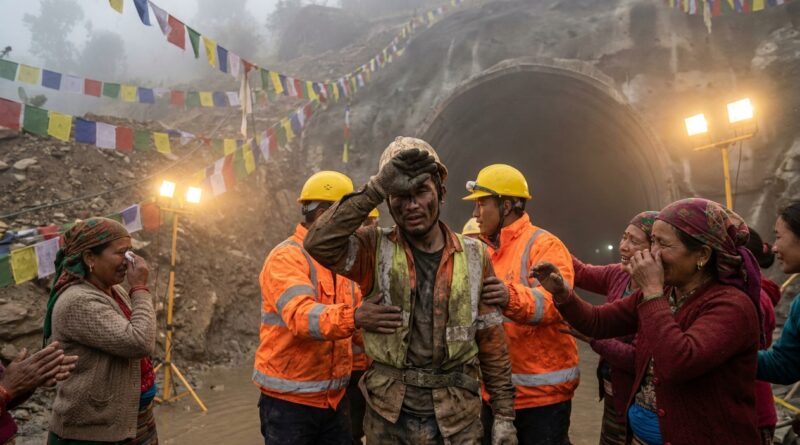
The Tunnel Worker Who Walked Out Alive After 9 Days Underground: Inside a ‘Second Life’ Miracle That United a Nation
You can scroll past only so many uplifting posts before they start to feel soft around the edges. Nice, sure. But maybe not solid enough to hold your own fear, grief, or exhaustion. That is why this real life tunnel rescue miracle story hit so hard. It was not polished inspiration pulled from a script. It was dirt, concrete, steel, trapped men, sleepless families, and a country waiting hour by hour for news that might never come. Then the impossible shifted. After days underground, after machinery stalled and rescue plans kept changing, one tunnel worker walked back into daylight alive after nine brutal days. People did not respond because they needed a slogan. They responded because this was physical hope. You could picture the dust in the air, hear the drills, feel the panic, and then the release. In a time when many people quietly wonder if miracles still happen, this survival gave them something rare. Proof that sometimes they do.
⚡ In a Hurry? Key Takeaways
- This was a modern rescue that felt miraculous because a trapped tunnel worker survived nine days underground and came out alive against grim odds.
- When stories like this grab you, pay attention to the practical side too. Rescue miracles usually come from faith, endurance, and relentless human work together.
- The value here is not just emotion. It is a real reminder that even when a situation looks buried, rescue can still break through.
What happened, in plain English
A tunnel collapse turned an ordinary workday into a nightmare. Workers were caught underground. Heavy rock and debris blocked the route out. The kind of blockage rescue crews hate. Not loose dirt you can quickly clear, but massive chunks of mountain and tunnel lining that can shift, fall again, and kill the people trying to help.
For nine days, the country followed every update. Families gathered at the tunnel mouth. Officials and engineers tried one method, then another. Drilling. cutting. clearing. Reassessing. Waiting. Starting again. It was slow because going too fast could make the collapse worse.
And then came the moment no one was ready to trust until they saw it with their own eyes. A worker emerged alive. After nine days in darkness, he stepped back into daylight. That is the point where a hard news story became something else entirely. Something people would later call a second life.
Why people called it a “second life” miracle
Miracle is one of those words that can make people tense up. Some hear faith. Some hear exaggeration. Some hear wishful thinking. But ordinary people often use the word in a simpler way. They mean this should not have ended like this, and yet somehow it did.
That is what made this feel different from a routine survival story. Nine days underground is not a cinematic detail added for effect. It is a brutal measure of time. Time without freedom. Time inside a collapsed space where air, water, injury, hunger, and despair all become real threats.
So when the worker came out alive, people did not need a debate club. They knew what they were looking at. A human being everyone feared was lost had come home.
What rescue crews were really up against
Not just digging, but controlled risk
From the outside, tunnel rescues can sound simple. Clear the rubble. Reach the trapped workers. Bring them out. In real life, it is more like trying to remove a jammed door while the whole house is still settling around you.
Engineers had to deal with unstable rock, heavy debris, cramped access, and the constant risk of another collapse. Reports from major tunnel rescues often mention boulders the size of cars, damaged drilling equipment, and rescue plans being revised on the fly. That is not incompetence. That is reality when geology starts making the rules.
Time becomes its own enemy
Every hour underground matters. Survivors can face dehydration, injury, cold, poor air, and mounting panic. Rescuers face a different pressure. They need speed, but speed can kill if it triggers more collapse.
That balancing act is part of why these rescues grip people so deeply. They are not clean. They are messy, tense, and painfully slow. Hope has to survive long stretches of bad news, delay, and uncertainty.
The families at the tunnel mouth
There is another reason this story spread so widely. It was not only about one worker underground. It was also about the people above ground living minute to minute.
Families waiting outside a disaster scene know a special kind of helplessness. They cannot fix the machinery. They cannot move the rock. They cannot force an update. All they can do is wait, pray, ask questions, cling to rumors, and search officials’ faces for clues.
That public waiting gave the story its emotional force. A whole nation could see what private suffering looks like when it spills into the open. Not abstract grief. Real people standing in dust and cold, hoping the next sound they hear is good news.
Why this story landed far beyond one tunnel
People are worn out. Not just by bad news, but by arguments about bad news. Is hope naive. Is faith irrational. Is survival random. Is “miracle” the wrong word. At some point, most readers stop wanting theories and start wanting something they can feel in their bones.
This story gave them that. It put skin on the word impossible. Not as a sermon. Not as a social media quote card. As a rescue.
That is why a real life tunnel rescue miracle story has such staying power. It meets people where they are. In their own private disasters. In the diagnosis that will not leave their mind. In the financial problem that keeps them awake at 3 a.m. In the relationship they are sure is buried for good. It does not promise that every ending will be happy. It simply refuses to let despair act like it knows the future.
Faith and engineering both had a place here
One of the healthiest things about this story is that it does not force a false choice. You do not have to pick between calling it a miracle and respecting the engineers. The rescue happened because people worked relentlessly, used skill, took risks, adjusted plans, and kept going. Families prayed. Communities watched. Both can exist at once.
That matters because many readers are tired of being told hope must be either spiritual or practical. Real life is usually both. The rescuer with the drill matters. The mother praying outside matters. The officials making calls matter. The survivor who refuses to give up matters.
What this teaches us about “impossible” situations
Impossible often means “we cannot yet see the path”
When the tunnel first collapsed, the ending people feared seemed more realistic than the ending they hoped for. That is often how impossible feels. Not dramatic. Just heavy. Closed off. Final.
But impossible situations sometimes change a little at a time. A route opens. Equipment arrives. Someone survives longer than expected. One breakthrough leads to another. Then a thing that looked finished is suddenly not finished at all.
Hope is not denial
This is important. Hope in a story like this is not pretending danger is small. The danger was huge. Hope means facing the facts and refusing to worship them.
That is a useful lesson well beyond tunnel accidents. You can admit a situation is terrible and still leave room for a better ending than the one you are bracing for.
Why readers are hungry for stories like this now
Because they are tired. Because grim headlines stack up. Because many people feel trapped in smaller, quieter tunnels of their own. Because “everything is awful” has become such a common posture that genuine rescue can feel almost shocking.
And because this kind of story is concrete. It has weight. You can almost hear the hammering, smell the dust, and see the first stunned look on the survivor’s face as he returns to light. That physical detail is what makes the hope stick.
It is also why people share these stories with friends and family. Not to avoid reality, but to answer it. To say, look, not every buried thing stays buried.
At a Glance: Comparison
| Feature/Aspect | Details | Verdict |
|---|---|---|
| Survival odds | Nine days underground after a collapse is the kind of timeline that usually drains public confidence fast. | Extraordinary survival |
| Rescue effort | Engineers and crews had to fight unstable debris, massive rock, and the risk of making the collapse worse. | Heroic and highly skilled |
| Emotional impact | Families waited publicly, a nation followed along, and one man stepping into daylight became a shared symbol of hope. | Deeply moving, bigger than one headline |
Conclusion
This story matters because people are exhausted by abstract debates over whether miracles are real while carrying very real trouble of their own. A nation holding its breath for trapped workers, engineers battling rock and time, families praying at a tunnel entrance, and a man stepping back into daylight after nine days in the dark gives us something solid to hold onto. Not a slogan. Not wishful thinking. A rescue you can practically hear and feel. In a week full of bleak headlines, this carefully reported survival reminds us that buried does not always mean finished. Sometimes, against the forecasts, against the odds, and against what fear insists is final, people really do come home.