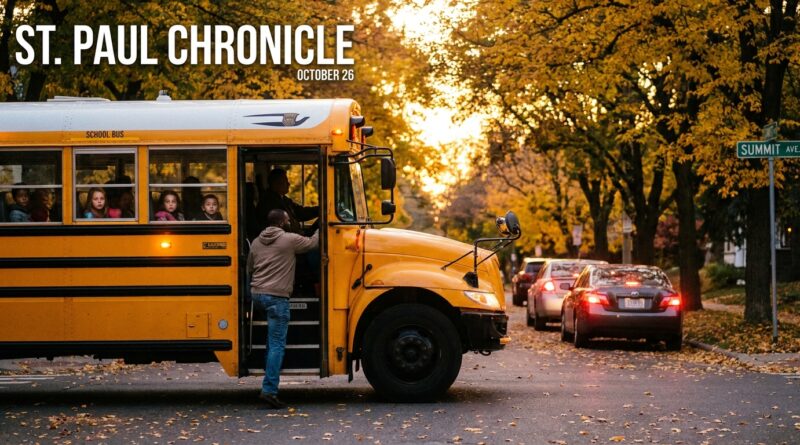
The Man Who Jumped Onto a Runaway School Bus: Inside a ‘Fifteen Seconds to a Miracle’ Rescue on a Minnesota Street
It is hard not to feel worn down by the news. You see one scary headline after another, and somewhere in the back of your mind a question starts to nag at you. If something awful happened right in front of people, would anyone really step in? That is what makes this runaway school bus miracle rescue in St. Paul hit so deeply. On an ordinary day, with traffic moving and people minding their business, a young man noticed something was very wrong. A school bus was rolling out of control. The driver appeared to be having a medical crisis. In a matter of seconds, he made a choice most of us hope someone would make, but never expect to witness. He jumped onto the moving bus and stopped it. No speeches. No grand setup. Just fast thinking, guts, and a life-saving act that feels almost impossible until you remember it really happened on a Minnesota street.
⚡ In a Hurry? Key Takeaways
- A young man in St. Paul reportedly saw a school bus rolling out of control and jumped aboard to stop it after realizing the driver was in medical distress.
- The big lesson is simple. Ordinary people can make life-saving choices in seconds when they stay alert and act with purpose.
- This story matters because it is both a safety reminder and a rare piece of good news that restores some faith in everyday courage.
What Happened on That Minnesota Street
The heart of this story is not complicated. That is part of why it lands so hard.
A school bus was moving when it should not have been. Something was clearly off. The driver was not in control in the normal sense, and the situation was turning dangerous in real time. Instead of freezing or assuming someone else would handle it, a nearby young man recognized the danger, rushed toward it, got onto the bus, and stopped it before something far worse could happen.
That is the core of the runaway school bus miracle rescue people are talking about. It was not planned. It was not polished. It was a split-second act in traffic, with real lives at stake.
Why This Story Feels Bigger Than One Rescue
Most of us are not wondering whether heroes exist in some movie version of life. We are wondering whether regular people still notice each other. Whether someone will move toward danger when every instinct says to step back.
This story answers that in the clearest possible way.
What happened in St. Paul speaks to a very modern kind of exhaustion. People feel overwhelmed. Bad news piles up. Trust feels thin. Then something like this happens, and it cuts through the noise. Not because it is sentimental, but because it is concrete. A bus was rolling. A driver needed help. A person stepped in.
Fifteen Seconds to a Miracle
The phrase fits because that is how these moments often work. They are short. Messy. Uncertain.
There is usually no time to gather a committee or talk through a plan. You see danger. You sense that a second or two could change everything. Then you act, or you do not.
From the outside, people call that bravery. From the inside, many rescuers describe it differently. They talk about a nudge. A pull. A quiet certainty that they needed to move now.
That is one reason this rescue feels so personal to so many readers. It was not flashy courage. It was human courage. The kind that shows up in jeans, sneakers, and the middle of a weekday.
How Someone Notices Trouble That Others Might Miss
Awareness matters
One detail worth sitting with is this. The rescuer noticed something was wrong before the situation fully turned into catastrophe.
That is often how real-world saves begin. Not with superhuman strength, but with attention. A strange movement. A vehicle drifting. A driver who does not look responsive. A pattern that tells you this is not normal.
He did not assume someone else had it covered
That may be the hardest part for many of us. In a crowd, it is easy to think help is already on the way. Sometimes it is. Sometimes it is not fast enough.
In this case, one person decided the moment was too serious to leave to chance.
What This Teaches Without Turning It Into a Lecture
There is a temptation to turn stories like this into a list of life hacks. That misses the point a little. Still, there are a few plain lessons here that matter.
1. Stay present in ordinary moments
Many emergencies do not begin with alarms. They begin with something subtle that looks off.
2. Quick action can matter more than perfect action
There was likely no time for a flawless response. There was only time to do the next right thing.
3. Courage often looks quiet at first
Big rescues are usually made of small internal decisions. Pay attention. Move closer. Help now.
The Human Side of the Driver’s Medical Crisis
It is also worth remembering that this was not just a runaway vehicle story. It was a medical emergency.
The driver was not simply careless or distracted. Reports indicate the driver was in crisis. That changes the emotional shape of the story. There are really two emergencies here at once. One involved the moving bus and everyone around it. The other involved a person whose health suddenly failed in public, at the worst possible moment.
That makes the rescue even more powerful. It was not just about stopping machinery. It was about protecting people, including the person at the wheel.
Why Communities Hold On to Stories Like This
Communities need more than warnings. They need examples.
Not fake inspiration. Real examples. The kind that remind people they are not helpless, and not alone.
When neighbors hear about a runaway school bus miracle rescue, they are not just reacting to the danger. They are responding to the proof that someone saw a crisis unfolding and refused to stand still. That kind of story travels because it gives people something rare right now. Relief.
It says, maybe not everything is broken. Maybe some part of the social fabric still works exactly when it counts.
This Was Not About Being Fearless
One thing people get wrong about heroism is assuming the person felt no fear.
That is usually not true.
The more likely truth is that fear was present, but urgency was louder. The rescuer did not need to be fearless. He needed to be willing. That distinction matters because it puts courage back within reach for ordinary people.
You do not have to be built differently from everyone else. Sometimes you just have to decide, very fast, that someone needs help more than you need comfort.
At a Glance: Comparison
| Feature/Aspect | Details | Verdict |
|---|---|---|
| The emergency | A school bus reportedly rolled out of control while the driver was in medical distress. | A true high-risk moment with very little time to respond. |
| The response | A young bystander recognized the danger, got onto the bus, and stopped it. | Fast, decisive action likely prevented a much worse outcome. |
| Why it resonates | It shows everyday courage appearing in an ordinary place during an ordinary day. | A powerful reminder that hope can show up in traffic, not just in headlines. |
Conclusion
This fresh story out of St. Paul matters because it speaks to something deeper than a single dramatic moment. A young man saw a school bus rolling out of control, understood the driver was in medical crisis, and leapt aboard to stop it in traffic. That kind of act reaches people because so many feel powerless and overwhelmed right now. It reminds us that the extraordinary is often hiding inside ordinary people on an ordinary weekday. What looks like simple courage from the outside can feel like a quiet, almost whispered prompting on the inside. In a news cycle packed with fear, this real-time miracle of protection and selfless action gives a community something solid to hold onto. Proof. Proof that everyday courage is still real. Proof that people still step up. Proof that sometimes the impossible still breaks into rush-hour traffic exactly when it is needed most.