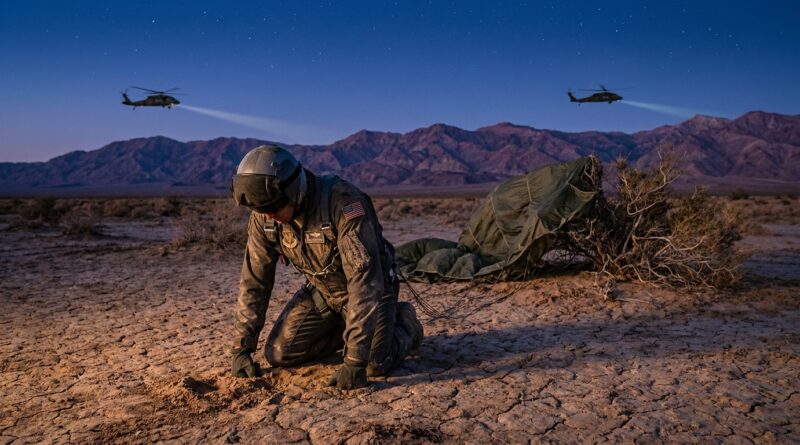
The Airman Who Fell From the Sky: Inside a ‘Modern-Day Miracle’ Survival in Enemy Territory
Some weeks the news feels like a steady drip of fear. War. Loss. Bad scans. Bills. Another door closing. After a while, it can wear down your faith and make the word miracle sound like something people say when they are out of facts. That is why this modern day miracle survival story of an Air Force pilot shot down in enemy territory hits so hard. It is not tidy. It is not soft. It is a story of pain, terror, prayer, and stubborn endurance.
Retired U.S. Air Force Colonel George “Bud” Day was flying a combat mission over North Vietnam in 1967 when his plane was hit. He ejected. His parachute did not fully save him from a brutal landing. He crashed into hostile terrain with broken bones, serious injuries, and enemy forces already searching for him. For roughly 50 hours he hid, crawled, prayed, and tried to move toward safety. He was eventually captured, and his suffering was far from over. Yet he would later speak of God’s hand in his survival, not as a vague idea, but as something real in the middle of chaos.
⚡ In a Hurry? Key Takeaways
- This modern day miracle survival story shows that Colonel Bud Day survived a shoot down, failed descent, severe injuries, and a manhunt through a mix of training, grit, prayer, and help from others.
- If you feel trapped by fear right now, take the next small step in front of you. Pray, stay steady, and do not confuse a hard situation with a finished story.
- The value in this story is not just military history. It is a real reminder that God’s protection can show up in places that look completely lost.
Why this story still grabs people
Some survival stories are exciting. This one is heavier than that. It speaks to anyone who has ever felt surrounded.
Bud Day was not dealing with a bad afternoon. He was dealing with the kind of danger most of us can barely picture. A fighter pilot shot down over enemy territory has seconds to react, not hours to think. Then came the landing. Then the injuries. Then the search parties.
And yet, when people tell the story today, what stands out is not only that he survived. It is how he understood the survival. He did not frame it as, “I am tougher than everybody else.” He saw grace in it. Protection in it. Mercy in it.
What happened when the plane went down
Shot down over North Vietnam
In August 1967, then-Major George Day was flying an F-100 Super Sabre on a combat mission when his aircraft was hit by enemy fire. He had to eject over hostile ground. That alone put him in a nearly impossible spot.
A landing that caused serious injuries
Ejecting from a burning aircraft is not a clean escape. Day suffered a violent descent and hard landing. Reports of the event describe broken bones and major physical trauma. He was in pain, exposed, and cut off. This was not a movie moment where the hero brushes off dust and starts sprinting. He was badly hurt.
Then came the manhunt
Enemy forces began searching for him. For about 50 hours, he evaded capture. He moved when he could. Hid when he had to. Endured thirst, pain, fear, and uncertainty. Every sound could have meant danger. Every decision carried weight.
That is what makes this a true modern day miracle survival story air force pilot shot down readers can connect with. It is not dramatic because somebody used a nice phrase. It is dramatic because the odds were crushing.
Why people call it a miracle, not just survival
Training mattered, but it was not the whole story
Of course his military training helped. It taught him how to think under pressure, how to hide, how to keep moving, and how to endure. That is real. We should not ignore it.
But training alone does not explain everything people saw in his life. Many trained men never made it home. Day himself understood that. He believed God preserved him through moments that should have ended differently.
Prayer was not a last resort
One reason this story lands with believers is that prayer was not a decorative detail added later. It was part of how he lived through suffering. In stories like this, prayer is not magic words. It is the stubborn act of trusting God while your body hurts and your future looks shut tight.
That matters because plenty of readers are doing their own version of crawling through hostile ground right now. Maybe not through a jungle. Maybe through chemo. Debt. Divorce. Grief. Depression. Prayer does not always remove the terrain. But it can keep you from collapsing in it.
The part people often miss
When we hear “miracle,” we sometimes picture instant rescue. But many miracles do not feel shiny while they are happening. They feel slow. Painful. Confusing.
Bud Day survived the shoot down and the manhunt, but that was not the end of his suffering. He was captured and later endured years as a prisoner of war. So if you are looking at your life and thinking, “If God is helping me, why is this still hard?” this story gives an honest answer. Help from God does not always mean quick comfort. Sometimes it means strength to endure what should have crushed you.
Faith and grit worked together
He kept moving
One of the clearest lessons here is simple. He did what he could do. He did not control the missile. He did not control the fall. He did not control the enemy. But he could still choose his next move.
That is often the only choice we get too. Not a five-year plan. Just the next faithful step.
He did not survive alone
Another important point is that rescue is rarely a solo event. Even the strongest person is part of a bigger chain. Fellow servicemen, rescuers, planners, medics, and others all play a role. In everyday life, that may look like doctors, church friends, a spouse, a counselor, or a neighbor who shows up with dinner.
If you are in a hard season, let this story push back on the lie that needing help means failing. Sometimes God’s protection arrives wearing another person’s face.
What this story says to people who feel hunted now
You may not be dodging enemy troops, but you still know what it is like to feel chased.
Chased by a diagnosis you did not expect. Chased by bills that stack up faster than your paycheck. Chased by a future you cannot read. Chased by regret. Chased by the fear that maybe this is how your story ends.
This story says, gently but firmly, not yet.
Your situation may be serious. Bud Day’s certainly was. But serious is not the same as final. Unwinnable is not the same as over.
Practical lessons from Bud Day’s survival
1. Do the next thing you can do
When life blows apart, your mind wants a full map. Usually you do not get one. Focus on the next right step. Make the call. Say the prayer. Go to the appointment. Ask for help. Rest for one hour. Then take the next step.
2. Let faith be active, not decorative
It is easy to talk about faith when life is calm. Harder when the sky is falling. Day’s story reminds us that faith is meant for impact zones too. Pray honestly. You do not need polished words.
3. Accept help without shame
Miracles often include people. If someone offers support, take it. If you need backup, ask. Pride can make a hard road harder.
4. Do not judge the whole story by one terrible chapter
This is the big one. A shoot down feels like the end. It was not the end. A capture feels like the end. It was not the end. In your life, this chapter may be ugly, but it may not be the last word.
Why his response matters as much as his survival
A lot of people survive awful things and come away praising their own toughness. Bud Day’s story is striking because he pointed past himself. Yes, he was courageous. Yes, he was disciplined. But he saw those things as part of the picture, not the whole picture.
That humility is one reason his story still speaks today. It leaves room for God. It leaves room for gratitude. It leaves room for the truth that being strong and being dependent on God are not opposites.
At a Glance: Comparison
| Feature/Aspect | Details | Verdict |
|---|---|---|
| Crisis faced | Combat shoot down, severe injuries, hostile terrain, and a 50-hour evasion attempt | Almost impossible odds, which is why the survival stands out |
| How he endured | Military training, mental toughness, prayer, and refusing to stop moving | A strong picture of faith and action working side by side |
| Why it matters today | It gives hope to people facing their own impossible-seeming battles | More than history, it is a reminder that hard is not hopeless |
Conclusion
This story matters now because so many people feel hunted by something. Maybe it is a diagnosis. Maybe it is a bill you cannot pay. Maybe it is a future you cannot see. Colonel Bud Day survived a violent shoot down, a brutal landing, broken bones, and a manhunt in enemy territory, and still chose to call it a miracle instead of a personal victory lap. That is what makes his story worth sitting with. It gives us a living picture of God’s protection when the sky is literally falling. It reminds us that courage still matters, prayer still matters, and other people still matter. Most of all, it reminds us that your story is not over just because the situation looks unwinnable. Sometimes the chapter that feels like the end is only the place where rescue starts.