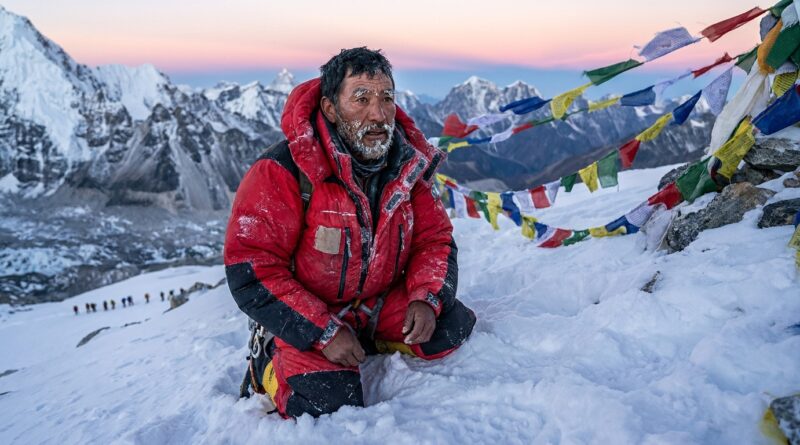
The Sherpa Who Came Back From ‘Impossible’: How a Guide Survived 6 Days on Everest With No Food or Oxygen
Some days it really does feel like the world is running on bad news. You open your phone for one quick check and get hit with loss, anger, disaster, and one more reason to think nobody makes it back from the edge anymore. That is why this Everest Sherpa miracle survival story lands so hard. It is not a legend from long ago. It is a real account of a veteran mountain guide who was believed dead, left behind during the brutal rush of Everest season, and then found alive after six days alone high on the mountain without food or supplemental oxygen. On a peak where small mistakes can turn fatal in minutes, his survival sounds impossible. But impossible is not the same thing as untrue. What happened up there matters, not just because it is dramatic, but because it reminds us that the human body can endure more than we think, and loyal people will sometimes keep searching long after everyone else has stopped.
⚡ In a Hurry? Key Takeaways
- This Everest Sherpa miracle survival story is about a veteran guide who survived nearly six days on Everest after being presumed dead.
- The big lesson is simple. Keep moving, keep looking, and do not assume all hope is gone just because the odds look terrible.
- Everest is still extremely dangerous. This is a story of rare human endurance, not a sign that the mountain is ever safe or forgiving.
Why this story hits people so deeply
Everest stories usually follow a grim script. A storm rolls in. Oxygen runs low. Someone disappears into cloud, ice, or exhaustion. Then the mountain keeps the ending.
That is why this one feels different.
A seasoned Sherpa guide, the kind of person other climbers trust with their lives, was caught in the chaos that can build during summit season. Traffic jams. Extreme altitude. Weak bodies. Bad visibility. Tiny decisions with huge consequences. At some point, he was separated, written off, and assumed lost for good.
But he was still alive.
For nearly a week, he endured conditions that kill even prepared climbers. No food. No bottled oxygen. Minimal shelter. Almost no margin for error. And somehow, he kept going long enough to be found.
What makes Everest so deadly in the first place
The air is the first enemy
Above about 8,000 meters, climbers enter what is often called the death zone. The body starts shutting down because there simply is not enough oxygen to support normal function for long. Thinking gets fuzzy. Balance goes. Decision making gets worse. Muscles weaken.
Even healthy, trained people can deteriorate frighteningly fast there.
Cold does not just hurt. It steals time.
At that altitude, cold is not a background detail. It is a countdown clock. Frostbite, dehydration, confusion, and exhaustion all stack on top of each other. A person can become too weak to clip a rope, open a zipper, or stand back up after a fall.
Traffic on Everest creates its own danger
People who have never followed Everest closely often picture a lone climber against nature. In reality, summit season can look more like a bottleneck. Long lines near fixed ropes mean delay, delay means more exposure, and more exposure means people burn through oxygen and strength before they can get down.
That rush can also create chaos. In bad conditions, separated climbers are harder to track, and rescue decisions become brutally complicated.
How someone could survive six days with no food or oxygen
This is the part people understandably struggle with. It sounds impossible because on paper, it nearly is.
Still, survival at altitude is not one simple switch. It is usually a mix of factors.
Experience matters more than most people realize
A veteran Sherpa is not just fit. He knows the mountain in a way most visiting climbers never will. He understands where to pause, where wind hits hardest, where slight shelter might exist, and how to ration movement when every step costs energy.
That kind of knowledge does not make Everest kind. But it can buy time.
Slow movement can be the difference
At altitude, panic burns oxygen faster. A person who can stay focused enough to move only when necessary, rest when possible, and avoid wasting energy may stretch survival longer than outsiders would expect.
The body sometimes holds on longer than logic says it should
Not forever. Not often. But sometimes. There are rare survival cases where cold, stillness, and stubborn endurance create a tiny window that should not be there, yet is. That does not make the danger less real. It just reminds us that the line between life and death is not always as neat as a chart.
The other miracle was the rescue effort
These stories do not end well unless somebody refuses to quit.
That matters here. Because one of the most powerful parts of this Everest Sherpa miracle survival story is not only that he stayed alive. It is that rescuers and members of his community kept searching when it would have been easier, and more socially acceptable, to accept the worst.
On Everest, there is pressure to be realistic. Sometimes that is another word for giving up. In this case, loyalty pushed back.
People looked again. They checked where others might not have checked. They held open the possibility that “gone” and “dead” were not the same thing yet.
If you want a deeper companion read on how extraordinary this case felt even to experienced mountain watchers, see The Sherpa Who Came Back From Everest’s ‘Death Zone’: Inside the Six-Day Miracle No One Can Explain.
Why Sherpas are too often treated as background characters
There is another reason to sit with this story for a minute.
Everest coverage often centers foreign climbers, their gear, their records, their fear, and their triumph. Meanwhile, Sherpas do the hard, dangerous work that makes many expeditions possible. They fix lines, carry loads, make judgment calls in lethal conditions, and often take the greatest risks for the least public credit.
So when a Sherpa survival story breaks through the noise, it deserves more than a quick gasp and a share button. It deserves respect.
This was not some nameless side character in another person’s adventure. This was a highly skilled human being with a family, a community, and years of experience on the mountain.
What ordinary readers can take from this
1. Do not confuse low odds with no hope
That is probably the biggest lesson here. Low odds are real. They matter. But they are not the same as certainty.
People get found late. Bodies recover. Minds clear. Help arrives. Not always, and not enough. But sometimes it does.
2. Quiet loyalty saves lives
A lot of modern life rewards the loudest reaction. This story rewards something else. The person who keeps calling. The teammate who checks one more time. The friend who does not write you off just because everyone else has moved on.
3. Endurance is often very unglamorous
We like survival stories when they sound cinematic. In real life, endurance is usually small and ugly. One more breath. One more crawl. One more hour. One more search pass. One more refusal to stop.
What this story is not
It is not proof that Everest is manageable.
It is not evidence that proper gear does not matter.
It is not a reason to romanticize high altitude suffering.
And it is definitely not a sign that people should take bigger risks because miracles happen.
Miracles, if you want to use that word, are memorable partly because they are rare. The right lesson is not “danger is fine.” The right lesson is “humans can sometimes endure more, and care more, than we think.”
At a Glance: Comparison
| Feature/Aspect | Details | Verdict |
|---|---|---|
| Survival conditions | Nearly six days on Everest with no food and no supplemental oxygen in extreme cold and altitude. | Extraordinary and exceptionally rare. |
| Reason he may have made it | Deep mountain experience, careful energy use, survival instinct, and a search effort that did not stop too soon. | Human skill plus stubborn rescue effort mattered. |
| Takeaway for readers | Even in brutal conditions, hope is sometimes more durable than the first official answer. | Worth remembering when life feels thin and bleak. |
Conclusion
This Everest Sherpa miracle survival story stays with you because it pushes back against a feeling many people carry around now. The feeling that once someone is lost, that is it. Case closed. Move on. But here was a veteran Sherpa, written off as dead after being left behind in the confusion of Everest climbing season, found alive after nearly a week alone on the highest mountain on Earth with no food and no supplemental oxygen. That does not erase the danger or the suffering. It does something better. It gives us one solid, current, verifiable reason to believe that people are tougher, more loyal, and more quietly brave than the daily feed suggests. When your own life feels like thin air, this kind of story can help you breathe a little. It can remind you that hope is not always loud, and rescue does not always arrive on schedule, but sometimes it still arrives. That is worth holding onto.