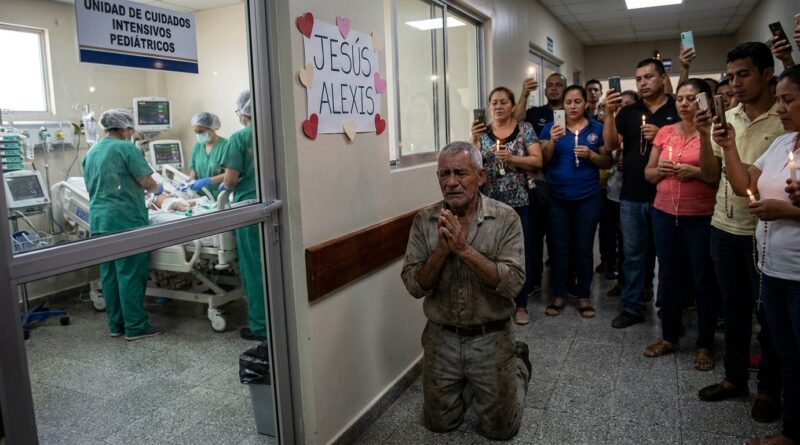
From Viral ICU Photo to Walking Out the Door: The Little Boy Honduras Is Calling a ‘Miracle of the Stairs’
Some days the news feels like a wall of grief. Another child in intensive care. Another family waiting by a hospital bed. Another headline that ends the way you feared it would. That is why the story coming out of Honduras has hit people so hard. It gives shape to hope when hope feels thin. Four-year-old Jesús Alexis was critically injured after falling from a bus staircase. He underwent two emergency surgeries, slipped into a coma, and spent weeks in the pediatric ICU while his family prayed for one more chance. Then a photo of his grandfather kneeling outside the unit in prayer spread across social media and into homes far beyond Honduras. People who had never met the boy began praying too. Now the child many feared would not survive has woken up, improved, and gone home. For many watching, this real life miracle story of a boy in coma wakes up after grandfather’s viral prayer feels less like a slogan and more like something you can hold onto.
⚡ In a Hurry? Key Takeaways
- Jesús Alexis, a 4-year-old in Honduras, survived a devastating fall, two emergency surgeries, and weeks in a coma before recovering enough to go home.
- If your family is in crisis, do the simple things that still matter. Show up, stay connected, ask for updates, and let your community help in practical ways.
- This story is inspiring, but it is not a replacement for medical care. The “miracle” happened alongside urgent surgery, ICU treatment, and constant family support.
What happened to Jesús Alexis?
According to reports shared widely in Honduras, little Jesús Alexis suffered severe injuries after falling from the staircase of a bus. It was the kind of accident that changes a family’s life in seconds. He was rushed for treatment and underwent two emergency surgeries.
After that came the stretch every parent and grandparent dreads. He remained in a coma for weeks in a pediatric intensive care unit. Doctors fought for him. His relatives waited. And like so many families in hospital corridors, they lived hour to hour.
That is the part people often miss when they hear a hopeful ending. Before the relief, there is usually a brutal middle. Fear. Silence. Long nights. No guarantees.
Why the photo of his grandfather touched so many people
The moment that pushed this story into the public eye was not a press conference or a polished interview. It was a simple photo. Jesús Alexis’s grandfather was seen kneeling outside the pediatric ICU, praying for the boy.
That image spread fast because it felt real. No posing. No speeches. Just a man who loved his grandson and had reached the point where all he could do was stay near the door and pray.
For caregivers, especially grandparents, that picture landed hard. It captured the helplessness of loving a child you cannot fix with your own hands. It also showed something else. Even when you cannot control the outcome, you can still be present. You can still love fiercely. You can still refuse to leave hope alone.
From coma to home
The outcome is what has made many in Honduras call him the “Miracle of the Stairs.” After weeks of critical care, Jesús Alexis began to improve. He woke up. His condition stabilized. And eventually, the family got the news they had been aching to hear. He was going home.
That does not mean the road was easy or that recovery ended at discharge. Children coming home after major trauma often still need follow-up care, rest, monitoring, and plenty of support. But walking out of the hospital instead of planning a funeral is the kind of turn families never forget.
It is also the reason this story has traveled so widely. People are hungry for something true that is not soaked in despair.
Why stories like this matter right now
When headlines are packed with violence and disaster, your brain starts protecting itself. Everything blurs. One emergency looks like the next. Medical stories become statistics instead of people.
This story breaks through that fog because it is specific. A little boy. A staircase fall. Two surgeries. A coma. A grandfather on his knees. A community praying. A child coming home.
That kind of detail matters. It reminds us that not every ICU story ends in loss. It gives hurting families a picture of survival that feels current and concrete, not sentimental or far away.
What families can take from it
1. Medical care and hope can sit in the same room
Sometimes people talk as if faith and treatment are competing ideas. In real hospitals, that is usually not how it works. Families pray while surgeons operate. Grandparents cry in hallways while nurses check monitors. Hope is not a substitute for care. It is often what helps people endure the care.
2. Small acts are not small when someone is in crisis
A phone call. A ride to the hospital. Sitting with a relative so they can shower. Sharing verified updates instead of rumors. These things look ordinary from the outside. To a family under pressure, they can feel life-saving.
3. Community still matters
The viral prayer photo did not heal Jesús Alexis by itself. But it rallied people. It focused attention. It reminded the family they were not suffering alone. That kind of support can carry people through the worst days.
What “miracle” means to different people
Not everyone uses the word miracle the same way. Some mean divine intervention. Some mean a medical recovery that beats the odds. Some simply mean, “We thought we were losing him, and now he is here.”
Whatever word you choose, the emotional truth is the same. This was a child in terrible condition who is now back home with his family. That is enough to move people deeply, whether they frame it in medical terms, spiritual terms, or both.
A gentle reality check for families in their own waiting season
If you are reading this because someone you love is in the ICU, this story may comfort you. I hope it does. But it is also important to say the quiet part plainly. Every case is different. One child’s recovery is not a guarantee for another family’s outcome.
What it can offer is something more honest than a promise. It offers permission to keep hoping. To keep showing up. To keep using every support available, from doctors and nurses to prayer circles and neighbors with casseroles.
And if you are the grandparent, the aunt, the older brother, the family friend who feels useless because you cannot change the scan or the surgery report, remember that presence counts. Love counts. Endurance counts.
At a Glance: Comparison
| Feature/Aspect | Details | Verdict |
|---|---|---|
| Crisis | A 4-year-old boy in Honduras fell from a bus staircase, suffered severe injuries, and entered a coma after emergency surgery. | A frightening, very real medical emergency. |
| Turning Point | A photo of the boy’s grandfather kneeling in prayer outside the pediatric ICU went viral and rallied nationwide attention and support. | A powerful reminder that visible love can unite a community. |
| Outcome | Jesús Alexis improved, woke from the coma, and was well enough to return home after weeks of treatment. | A rare and deeply hopeful ending. |
Conclusion
Right now, it is easy to feel buried under brutal headlines and cold medical numbers. That is what makes the story of Jesús Alexis so hard to forget. A four-year-old boy in Honduras fell from a bus staircase, underwent two emergency surgeries, spent weeks in a coma, and still made it home. Alongside the doctors and ICU staff was a grandfather on his knees outside a hospital door, refusing to stop praying. That image gave people something they badly needed. Not fantasy. Not a movie script. A real family, a real crisis, and a real recovery. If you are carrying your own fear for a child, a parent, or anyone you love, this story cannot promise your ending. But it can remind you that not every ICU story ends in loss, and that stubborn love, steady presence, skilled medical care, and a community that gathers around suffering can still move mountains.