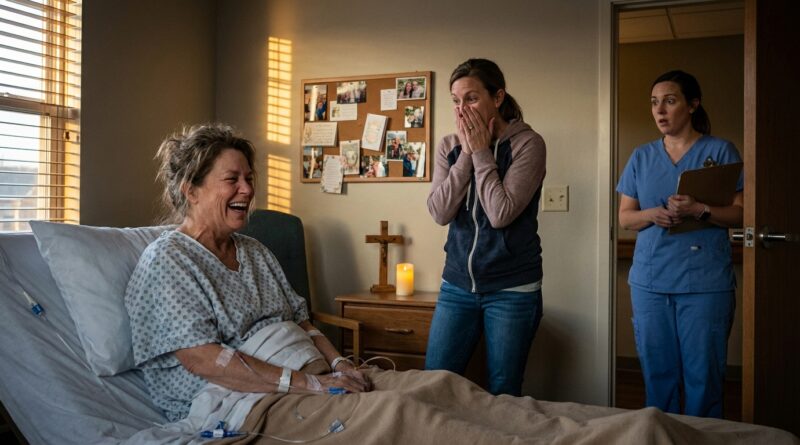
The Mom Who Walked Out Of Hospice: Inside a ‘We Said Our Goodbyes… Then She Came Back’ Cancer Miracle
Some news hits like a door slamming shut. “There’s nothing more we can do.” “Call hospice.” “It’s time to say goodbye.” If you have ever sat in that room, or waited for that phone call, you know how final those words can feel. That is why a real life hospice cancer miracle story matters so much. Not because it erases grief, and not because it promises every ending will change, but because it reminds people that medicine is full of probabilities, not certainties. In the case at the heart of this story, a mother with advanced cancer was sent home under hospice care, with loved ones preparing for the end. Goodbyes were said. Expectations dropped to hours or days. Then something changed. She stabilized. She regained strength. And against all expectations, she eventually walked back out of hospice care. Stories like this do not cancel science. They widen the conversation and give families room to ask one more question before giving up.
⚡ In a Hurry? Key Takeaways
- Yes, some hospice patients do stabilize enough to leave hospice, even after a terminal cancer diagnosis.
- If you are facing a similar situation, ask clear questions about prognosis, reversible problems, second opinions, and whether hospice can be stopped and restarted.
- A “miracle” story should offer hope, not pressure. Every case is different, and comfort care is still real care.
What Actually Happened
The reason this kind of story spreads so fast is simple. It cuts straight through that numb feeling families get after bad news. A mother was believed to be near death from cancer. Hospice was called in. Family members did what families do in those moments. They gathered. They cried. They said the things people pray they will have time to say.
Then the expected decline did not happen on schedule.
Instead of slipping away, she began to hold steady. Then she improved. In some versions of stories like this, the change is tied to better symptom control, treatment of an infection, improved hydration, a medication adjustment, or simply the body responding in an unexpected way. In other cases, doctors themselves cannot fully explain why a patient rebounds.
The key point is this. Hospice is not a locked one-way door. If a patient’s condition improves or levels off, they can be discharged from hospice and move back into regular medical follow-up.
Why This Feels Like a Miracle
To families, it often is one.
When someone has been sent home to die, the emotional clock changes. People stop planning for recovery and start planning for loss. So when that person sits up, eats, talks, asks for fresh clothes, wants to go outside, or starts walking again, it can feel impossible in the best sense of the word.
And honestly, some of the language around terminal illness can be too neat. Doctors speak in odds because that is how medicine works. Families live in hours, faces, and tiny changes. Those two realities do not always match.
Miracle does not have to mean magic
For some people, miracle means divine intervention. For others, it means an outcome so unlikely that it breaks the script everyone had accepted. Both uses show up in real life.
What matters most is that the story is grounded. Not fake hope. Not internet rumor. A real person. A real diagnosis. A real hospice enrollment. And a real reversal that nobody expected.
Can Cancer Patients Really Leave Hospice?
Yes. It happens more often than many people realize.
Hospice is meant for people believed to have six months or less to live if an illness follows its usual course. That phrase matters. “Usual course” is not a guarantee. It is a clinical judgment.
Sometimes patients improve because pain is finally under control. Sometimes they begin eating again once nausea is treated. Sometimes a crisis passes. Sometimes a doctor’s estimate is simply wrong. Prognosis is an educated guess, not a stopwatch.
What hospice discharge can look like
A patient may leave hospice if:
- their condition is stable for longer than expected,
- they improve enough that they no longer meet hospice criteria,
- they choose to restart curative or disease-directed treatment,
- they want a different kind of care plan.
That does not mean the original diagnosis was fake. It means the path changed.
What Families Can Learn From This Story
This is where a real life hospice cancer miracle story becomes useful, not just emotional.
If your loved one has been told there are no more options, you do not need to become combative or deny reality. But you can ask better questions. Calm, specific questions. The kind that sometimes uncover something important.
Questions worth asking
- What exactly is driving the decline right now, the cancer itself or a treatable complication?
- Are there reversible problems like infection, dehydration, medication side effects, or poor pain control?
- What would improvement look like over the next 24 to 72 hours?
- If the patient stabilizes, can hospice be paused or ended?
- Would a second opinion change anything at this stage?
- What is the goal right now, comfort only, more testing, or a time-limited trial of treatment?
These questions do not guarantee a dramatic turnaround. But they help families make decisions with their eyes open.
The Part People Often Miss About Hospice
Hospice is not giving up. It is a type of care focused on comfort, dignity, and quality of life. For some patients, that support is exactly what helps them rally.
That may sound strange at first. But think about what happens when pain drops, fear settles, breathing gets easier, sleep improves, and the chaos around a patient finally quiets down. Bodies sometimes respond to comfort in powerful ways.
Not always. But sometimes.
Why comfort can change the picture
When symptoms are out of control, a person can look much closer to death than they really are. Severe pain, unmanaged nausea, panic, constipation, exhaustion, and poor intake can flatten someone fast. Good hospice care can ease those burdens. Once that happens, some patients regain enough strength to surprise everyone.
How to Hold Hope Without Ignoring Reality
This is the tricky part.
Families often feel pushed into one of two corners. Either “stay positive” no matter what, or “accept the worst” immediately. Real life is messier than that. You can hope for more time and still prepare for hard news. You can believe in the possibility of recovery and still sign hospice papers. You can say goodbye and still pray you will need to say hello again tomorrow.
That middle ground is where many families actually live.
A better mindset
Try this instead: “We are dealing with what is true today, while staying open to what could change tomorrow.”
That sentence gives people room to breathe. It is honest. It does not shut the door too early.
What This Story Does Not Mean
It does not mean every terminal diagnosis is wrong.
It does not mean families should chase every rumor or reject palliative care.
It does not mean a patient who dies in hospice lacked faith or “didn’t fight hard enough.” That kind of thinking hurts people who are already carrying too much.
A recovery story should never be used as a weapon against those whose outcome is different.
Use hope carefully
The healthiest way to read a story like this is to let it expand your sense of possibility, not replace medical judgment altogether. Hope is helpful when it leads to better questions, closer attention, and more human care. It becomes harmful when it creates guilt or denial.
Why Stories Like This Spread So Deeply
Because people are starving for proof that the worst sentence in the room is not always the last one.
And to be fair, healthcare can feel cold when you are living inside it. Charts, percentages, timelines, decline curves. Families do not remember those things first. They remember the hand squeeze, the first spoonful of soup, the morning their loved one opened their eyes and asked what day it was.
That is why this kind of story lands so hard. It restores something people worry they have lost. Not just hope, but permission to hope.
At a Glance: Comparison
| Feature/Aspect | Details | Verdict |
|---|---|---|
| Hospice enrollment | Used when a patient is thought to be nearing end of life and comfort becomes the main goal. | Not always permanent. Patients can improve. |
| Unexpected recovery | Some patients stabilize after symptom relief, treatment of a complication, or an unplanned rebound. | Rare, but real enough that families should know it can happen. |
| What families should do | Ask what is reversible, what the goals are, and what signs would show improvement or decline. | Best approach is hopeful, informed, and practical. |
Conclusion
If you are reading this while waiting on scans, bracing for surgery, or sitting with someone who has heard “there’s nothing more we can do,” this story matters for a reason. A grounded account of a hospice patient who stabilized and recovered after being sent home to die offers more than a quick emotional lift. It gives families language. Language to ask if anything is reversible. Language to ask what hospice really means. Language to hold on for one more night without lying to themselves about the seriousness of what is happening. Statistics matter, but they are not the final word on any human being. Neither is a bleak conversation delivered on a hard day. Sometimes the expected ending arrives. Sometimes it does not. And for caregivers who feel invisible, and patients who are scared to even whisper the word miracle, that small opening can be a lifeline.