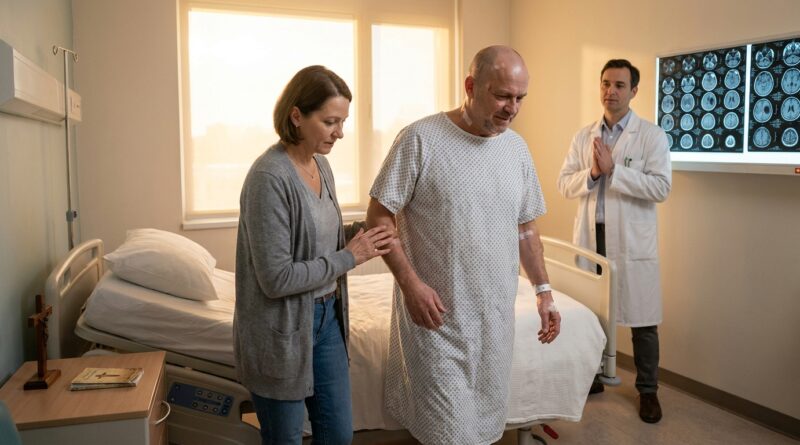
The Wife Who Beat the Clock: Inside a ‘He Shouldn’t Be Walking’ Miracle Stroke Comeback
When a stroke hits, the hardest part is often the first few minutes. You see something is wrong, but your brain wants to explain it away. Maybe he is tired. Maybe his leg fell asleep. Maybe she just needs water. That kind of second guessing is painfully human, and it is exactly why so many families get to the hospital asking one awful question. Did we wait too long? This real life miracle stroke recovery story matters because one wife did not let panic make the decision for her. She trusted what she saw, moved fast, prayed hard, and got her husband help in time. Doctors later said he should not be walking the way he is now. Yet here he is, a living reminder that quick action can change everything. For worn-out families trying to hold faith and fear in the same hand, this story offers something practical. Hope, yes, but also a plan.
⚡ In a Hurry? Key Takeaways
- In this real life miracle stroke recovery story, a wife recognized trouble quickly, got emergency help fast, and that speed likely helped save her husband’s future.
- If you notice facial drooping, arm weakness, speech trouble, or sudden confusion, call 911 right away and note the time symptoms started.
- Prayer can steady a family in crisis, but it works best alongside fast medical care, not instead of it.
When Minutes Matter, Freezing Feels Normal
Most people think they will know exactly what to do in an emergency. Then real life hits, and everything gets foggy.
That is what makes this story so powerful. It is not just about a recovery that surprised the doctors. It is about the moment before that, when his wife had to decide whether this was serious enough to act on right now.
She did what many of us hope we would do. She listened to her gut. She paid attention to what was changing in front of her. And she did not wait for perfect certainty.
That choice may have made all the difference.
The Wife Who Beat the Clock
She noticed the signs
Stroke symptoms can show up fast. A face that suddenly looks uneven. A hand that will not grip. Words that come out slurred or not at all. A strange blank look. Trouble standing. Sudden weakness on one side.
To the family living it, those signs do not always arrive with a flashing warning label. They can look messy and confusing. That is why people lose precious time.
In this case, his wife did not brush it off. She saw enough to know this was bigger than waiting it out at home.
She acted before she had all the answers
This is the part worth underlining. She did not need a medical degree. She did not need to know which artery was blocked or which treatment he might qualify for. She just needed to recognize that something was very wrong and get help fast.
That is what being ready really looks like. Not staying calm and heroic in some movie-scene way. Just moving.
Why Fast Action Changes Stroke Outcomes
Doctors often say, “time is brain.” It sounds simple, but it carries a heavy truth. During certain kinds of stroke, blood flow to part of the brain is blocked. The longer that blockage lasts, the more damage can happen.
That is why emergency teams ask when symptoms started. Treatments may depend on that timeline. The sooner a person gets to the right hospital, the more options doctors may have.
And sometimes those options lead to the kind of result that leaves everyone shaking their heads in gratitude.
When people later say, “He shouldn’t be walking,” they are usually talking about the gap between what the injury suggested and what recovery actually became. That does not happen every time. But fast action gives a person a fighting chance.
Where Faith Fits In
Families in crisis often hear two bad messages. One says faith is all you need, as if prayer should replace action. The other says prayer is just a private comfort with no practical value.
Real life is usually more honest than either extreme.
Prayer can steady your breathing long enough to make the call. Faith can help a spouse trust that awful inner nudge and get moving. It can carry a family through ICU nights, rehab setbacks, and the long stretch where progress comes inch by inch.
In a story like this, faith and medicine are not enemies. They work side by side. One helps you endure. The other helps treat the injury in front of you.
What This Family’s Miracle Really Teaches
Miracles do not cancel preparation
One of the most useful lessons here is that hope is not passive. The wife in this story did not sit back and wish for the best. She responded.
That matters for every family reading this. Being prayerful and being prepared can live in the same house.
Recovery is often messy, not instant
When we hear “miracle recovery,” we sometimes picture someone waking up and being completely fine by lunch. Real recovery is usually slower than that. It can involve rehab, repeated exercises, exhaustion, frustration, and tiny wins that outsiders might miss.
But tiny wins count. A stronger step. A clearer sentence. A hand squeeze. A swallow. A memory returning. These are not small things when you have been told not to expect much.
If this story moves you, you may also want to read The Grandma Who Squeezed Back: Inside a ‘They Said She’d Never Know Us Again’ Stroke Miracle, which captures that same mix of heartbreak, persistence, and unexpected grace.
How to Be Ready Before a Crisis Hits
Learn the basic stroke signs
A simple way to remember stroke warning signs is FAST:
Face drooping.
Arm weakness.
Speech difficulty.
Time to call 911.
Other sudden symptoms can include confusion, severe headache, dizziness, trouble walking, numbness, or vision problems.
Do not drive yourself if emergency help is available
Calling 911 matters. Paramedics can begin care on the way and alert the hospital that a possible stroke patient is coming in. That can save more time.
Note the time symptoms started
If you can, look at the clock. Even an estimate helps. Doctors use that information to decide what treatments may still be safe and useful.
Keep a short medical list handy
Write down medications, allergies, major diagnoses, and emergency contacts. In a panic, even simple facts can vanish from your mind.
Talk about “what if” before you need to
No one enjoys these conversations, but they matter. Who calls 911. Which hospital is closest. Who grabs medications or ID. Who updates family. A little planning lowers chaos.
What Loved Ones Need to Hear After the Emergency
If you are the spouse or child who made the call, you may replay every minute afterward. Did I miss something sooner? Did I say the right thing? Should I have pushed harder?
Be gentle with yourself.
The point is not perfection. The point is action. In many stroke stories, the family member who trusted their gut becomes part of the reason there is a recovery story to tell at all.
That does not make the fear smaller in the moment. It does mean your instincts can matter more than you think.
At a Glance: Comparison
| Feature/Aspect | Details | Verdict |
|---|---|---|
| Early recognition | His wife noticed sudden changes and treated them as urgent instead of waiting to see if they passed. | Likely critical to the outcome |
| Faith and prayer | Prayer gave the family strength and focus during a frightening, fast-moving emergency and recovery. | A real source of comfort and courage |
| Medical treatment | Rapid hospital care gave doctors the best chance to limit damage and support recovery. | Essential, not optional |
Conclusion
For readers living a little on edge, worried about the next diagnosis or the next late-night phone call, this story offers more than inspiration. It offers a pattern. Notice the signs. Trust your gut. Call for help fast. Pray if that is where your strength comes from, but do not confuse waiting with faith. This real life miracle stroke recovery story shows how a terrifying day can turn into a second chance when love moves quickly and medicine gets room to work. And if you ever face that moment yourself, may this story stay with you long enough to help you act before the clock wins.