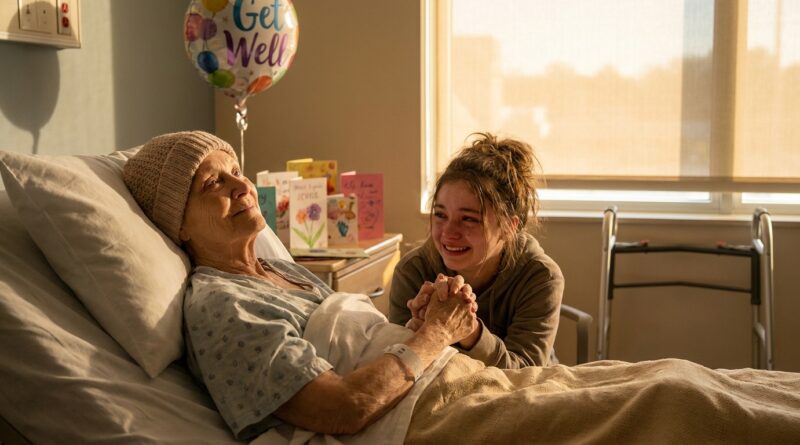
The Grandma Who Squeezed Back: Inside a ‘They Said She’d Never Know Us Again’ Stroke Miracle
If you have ever sat beside a hospital bed after a stroke, you know the particular kind of heartbreak that comes with not knowing. Your loved one is still here, but also not fully here, and every beep, scan, and guarded update feels like it is asking you to prepare for the worst. Families get told to be realistic. They get warned not to expect too much. And sometimes that is fair. But sometimes, against all odds, a person reaches back. That is why this real life stroke recovery miracle story hits so hard. It is not just about medicine. It is about a grandmother who was feared lost after a devastating stroke, then slowly, unmistakably, came back. Not all stroke stories end this way. It is important to say that clearly. Still, for families living in that terrible in-between, stories like this can feel like oxygen.
⚡ In a Hurry? Key Takeaways
- A grandmother once thought unlikely to recognize family after a severe stroke surprised doctors and loved ones by reconnecting in ways they feared would never happen.
- If you are caring for someone after a stroke, keep showing up with familiar voices, touch, routine, and rehab support, even when progress feels painfully slow.
- Miracle stories bring hope, but stroke recovery is unpredictable, so families should pair hope with medical guidance and realistic day-to-day care.
When “She May Never Know You Again” Is the Worst Sentence in the Room
There are medical phrases that land like bricks. This is one of them.
After a major stroke, families often hear some version of, “We just don’t know how much she will recover,” or worse, “She may never be the same person again.” That kind of uncertainty is brutal because it does not give you a clean answer. It leaves you hovering between grief and hope.
In this case, the fear was especially sharp. A grandmother suffered a devastating stroke, and the damage appeared serious enough that those around her were left wondering whether recognition, speech, warmth, and connection were gone for good. It was the kind of situation that makes people replay every ordinary memory. The last cup of coffee. The last birthday call. The last tiny disagreement that now feels enormous.
Then something changed.
The Moment She Reached Back
Stories like this become unforgettable because recovery does not always arrive in a dramatic movie scene. Often it starts small.
A squeeze of the hand. A look that lingers a second longer. A flicker of recognition. The kind of sign that family members notice before anyone else does, because they know the person under all the tubes, swelling, and silence.
That is what makes this kind of real life stroke recovery miracle story so powerful. Her comeback was not just about surviving. It was about connection returning. Doctors reportedly used the word “miracle,” not because medicine failed, but because the human brain can still surprise even experienced professionals.
And for the family, that comeback meant the scariest possibility did not fully come true. She was still in there. Maybe changed, maybe slower, maybe facing a long road, but still there.
Why Stroke Recovery Can Look So Unpredictable
One reason these stories hit home is that stroke recovery is messy. It does not move in a straight line.
The brain is complicated
A stroke interrupts blood flow to part of the brain. Depending on where it happens and how quickly treatment starts, it can affect speech, memory, movement, swallowing, mood, or awareness. Two people can have “a stroke” and end up with very different outcomes.
Early predictions are not always final
Doctors have to be honest, especially in the first hours and days. They cannot promise a full recovery when the picture is still unfolding. But early severity does not always tell the whole story. Swelling can change. Rehab can help. The brain can sometimes reroute functions in ways that are hard to predict.
Families often notice progress before charts do
Clinical scales matter. So do scans. But caregivers often spot the first meaningful signs. A familiar response to a granddaughter’s voice. A stronger grip. A tiny effort to form words. Those moments matter because recovery is lived at the bedside before it is fully captured on paper.
What Caregivers Can Actually Do While Waiting
One of the hardest parts of stroke recovery is feeling useless. You cannot out-will a stroke. You cannot bargain with a scan result. But there are still real, grounded things families can do.
Bring calm, familiar presence
Talk to your loved one normally. Not loudly. Not like they are gone. Use names, simple memories, and reassurance. Familiar voices can be grounding, even when a person cannot respond clearly.
Keep a notebook
Write down changes, however small. “Opened eyes when son spoke.” “Moved left fingers today.” “Seemed calmer during favorite song.” This helps with doctor conversations and gives families something concrete when each day blurs into the next.
Ask rehab questions early
Even when recovery is uncertain, ask about physical therapy, speech therapy, occupational therapy, swallowing evaluation, and cognitive rehab. Sometimes families wait because they assume “it is too soon.” It is better to ask.
Take turns being strong
No one can carry bedside fear alone for long. Use the group text. Let people bring food. Let someone else sit the late shift. Quiet heroes burn out fast when they try to do everything.
The Emotional Truth Behind the “Miracle” Label
When doctors or relatives call something a miracle, they are usually describing more than a medical event. They are describing relief. Shock. Gratitude. The return of something deeply human that seemed lost.
That is the heart of this story. Not perfection. Not a promise that every devastating stroke ends in reunion. The miracle is that connection returned where many feared there would only be absence.
If this story speaks to you, it may also be because you have seen how recovery can reappear in surprising ways. That is part of why people hold onto stories like The Teacher Who Woke Up Speaking Again: Inside a ‘We Watched Her Words Come Back to Life’ Classroom Miracle. Different person, different path, same emotional truth. Sometimes what looks gone is not fully gone.
Hope Without Pretending
Hope is tricky in hospital hallways. Too little, and people feel abandoned. Too much, and families can feel misled.
The healthiest version of hope is honest. It sounds like this: we do not know yet, but we are still watching, still trying, still treating, still showing up.
That is what this grandmother’s story offers. Not fantasy. Not a guarantee. A reminder that some outcomes remain unwritten longer than people expect.
For caregivers, that matters. It can mean the difference between emotionally checking out and staying engaged long enough to notice the small signs that become bigger ones.
At a Glance: Comparison
| Feature/Aspect | Details | Verdict |
|---|---|---|
| Initial outlook | Family faced the terrifying possibility that the grandmother might survive physically but never fully reconnect. | Bleak, but not always final |
| Turning point | Signs of recognition and response suggested that the person they loved was still present and reaching back. | Small changes can mean a lot |
| Takeaway for readers | Stroke recovery can surprise everyone, so families should stay involved, ask questions, and hold onto cautious hope. | Hope helps when paired with care |
Conclusion
Fresh stories like this matter because so many people are quietly carrying the same fear. They worry that someone they love has vanished behind a diagnosis, and all that is left is learning how to say goodbye. This grandmother’s comeback does not erase the pain of stroke, and it should not be twisted into a promise for every family. But it does offer something real. A concrete example of a woman whose recovery was striking enough that even doctors called it a miracle. When statistics feel cold and final, that kind of story can help exhausted caregivers keep one small light on. It also honors the people who keep showing up anyway, in rehab gyms, waiting rooms, and family group texts, long before anyone knows how the story will end.