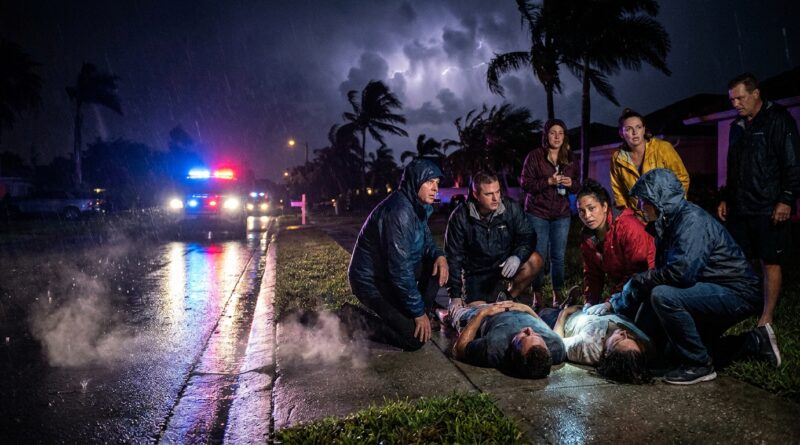
The Night Lightning Hit Twice: Inside a ‘No Way We Should Be Alive’ Miracle on a Florida Sidewalk
Some days it feels like hope is taking body blows. You open the news, brace for the next ugly headline, and start to wonder whether stories of mercy and protection only happen to other people. That is what makes this real life lightning strike miracle survival story hit so hard. On an ordinary Florida sidewalk, a couple was struck by lightning not once, but in a terrifying chain of events that should have ended in heartbreak. Instead, they survived. There was pain. There was shock. There was the kind of fear that makes time slow down. But there were also witnesses, quick-moving strangers, medical care, and a recovery that many people would call nothing short of miraculous. If you have been craving one solid reason to believe that life can still surprise us with grace, this story earns your attention. It is frightening, yes. It is also deeply human, and strangely comforting.
⚡ In a Hurry? Key Takeaways
- This was a medically documented, caught-on-camera lightning survival that many see as a miracle because the couple lived through an event that often turns deadly in seconds.
- If storms are nearby, get indoors fast. Sidewalks, open areas, and “just one more minute outside” choices can turn dangerous quickly.
- The story matters not only because of survival, but because strangers stepped in instead of freezing, showing how much human courage still counts in a crisis.
When an Ordinary Walk Turns Into a Fight to Stay Alive
Lightning stories can sound distant until you remember how fast weather changes in Florida. One minute you are walking, talking, thinking about dinner or errands. The next minute, the sky cracks open.
That is part of why this story lands so hard. It did not happen on a mountain peak or in some extreme adventure setting. It happened during normal life. On a sidewalk. The kind of place where people push strollers, walk dogs, and assume they are basically safe.
Then the strike came, and everything changed.
Why people call it a miracle
When people hear “miracle,” they usually split into two groups. Some believe right away. Others get cautious. Fair enough. But in cases like this, the word sticks because the facts themselves are so stark. A lightning strike can stop a heart, damage the nervous system, burn skin, scramble memory, and leave lasting trauma.
Yet here was a couple who endured something that looked unsurvivable and lived to tell the story.
That does not erase the medical reality. If anything, it sharpens it. Survival was not easy. It involved injury, fear, and recovery. But survival happened.
What Makes This a Real Life Lightning Strike Miracle Survival Story
Plenty of dramatic stories get exaggerated online. This one stands out because it was documented, witnessed, and taken seriously by medical professionals. That matters. It gives the story weight.
It also gives readers something rare right now. Not fantasy. Not hype. Something grounded and still astonishing.
If you want another angle on how this couple processed the terror and aftermath, the piece The Couple Who Got Up After the Lightning: Inside an ‘I Thought I Was Going to Die’ Survival Miracle adds even more emotional context to what they endured.
The phrase “no way we should be alive” makes sense here
People say things like that after near misses all the time. But with lightning, the numbers and risks back up the feeling. A strike is not just a dramatic flash in the sky. It is a violent electrical event that can tear through the body in an instant.
That is why survivors often sound stunned long after the physical danger passes. They know how close they came.
The Quiet Heroism That Deserves Attention Too
There is another part of this story that matters just as much. The good Samaritans.
In a crisis, people like to imagine they would know exactly what to do. Real life is messier. Some freeze. Some panic. Some look around, hoping someone else will take charge.
But in this case, strangers moved toward danger.
That should not be treated like a side note. It is a big deal. Fast help can make a huge difference after a lightning strike, especially if breathing or heart rhythm is affected. Emergency response starts before the ambulance arrives. It starts with ordinary people willing to act.
Why that part hits home
Because many of us are tired of seeing the worst of each other. Angry clips. Petty cruelty. Constant division. Then a story like this breaks through and reminds us that decency is still alive. People still kneel on pavement. Still call for help. Still stay with strangers in terrifying moments.
That kind of courage is contagious in the best way.
What Lightning Survival Really Looks Like
Survival is not always a movie ending where someone stands up and everything is fine. Sometimes survival means confusion, pain, hospital visits, and a long emotional exhale afterward.
Lightning can affect the brain, nerves, muscles, skin, and heart. Even people who live through it may deal with memory issues, weakness, sleep problems, anxiety, or a sense that life has split into “before” and “after.”
So when we call this a miracle, it should not erase the hard parts. It should honor the full picture. The terror. The treatment. The recovery. The gratitude.
A note for anyone who feels shaken by stories like this
If this story stirs up your own close call, that is normal. Many people carry moments they cannot fully explain. A car that missed them by inches. A diagnosis caught just in time. A stranger who showed up at exactly the right second.
You do not have to force a label onto those moments. But you also do not have to talk yourself out of wonder.
Simple Safety Lessons Worth Remembering
Even miracle stories come with practical lessons. Lightning is not something to shrug off.
If you hear thunder, start moving
If thunder is close enough to hear, lightning is close enough to be dangerous. Do not wait for rain to get heavy. Do not assume the sidewalk, porch, or a lone tree offers real protection.
Best shelter is a real building or hard-topped vehicle
An enclosed building is best. A hard-topped car is usually far safer than staying outside. Open shelters are not enough.
After a strike, call emergency services right away
A lightning victim does not “hold” electricity, so it is safe to touch and help them. That is an important point people often get wrong. Quick CPR and fast emergency care can save a life.
Why Stories Like This Matter More Than We Admit
It is easy to dismiss survival stories as feel-good content. But sometimes they do real work in people. They steady us. They remind us that the world is not only cruel and random. It is also full of intervention, timing, bravery, and mercy we cannot fully map out.
That does not mean every ending is easy. It means some endings leave room for gratitude.
And maybe that is what so many people are starving for. Not denial. Not sugarcoating. Just one honest reason to believe that even in a frightening world, help can still arrive.
At a Glance: Comparison
| Feature/Aspect | Details | Verdict |
|---|---|---|
| Medical reality | Lightning strikes can cause cardiac arrest, nerve damage, burns, and lasting trauma, which makes survival medically significant. | This was genuinely life-threatening, not just dramatic. |
| Human response | Good Samaritans stepped in quickly instead of standing back, helping bridge the gap before full emergency care took over. | A powerful reminder that ordinary people can change outcomes. |
| Meaning for readers | The story offers documented hope in a time when many people feel emotionally worn down by bad news. | Worth reading as both a survival account and a faith-restoring moment. |
Conclusion
What stays with you in this story is not just the flash of lightning. It is everything that came after. The survival. The care. The strangers who ran toward trouble instead of away from it. Right now the news is loud with anger and division, so a medically documented, caught-on-camera survival story gives people something rare: permission to believe again that help can appear out of nowhere and that strangers still run toward danger for each other. Sharing this couple’s recovery and the quiet heroism of the good Samaritans who refused to freeze can pull us out of numb scrolling and back toward gratitude, courage, and the steady hope that even an ordinary walk around the block may be held by a God who still intervenes.