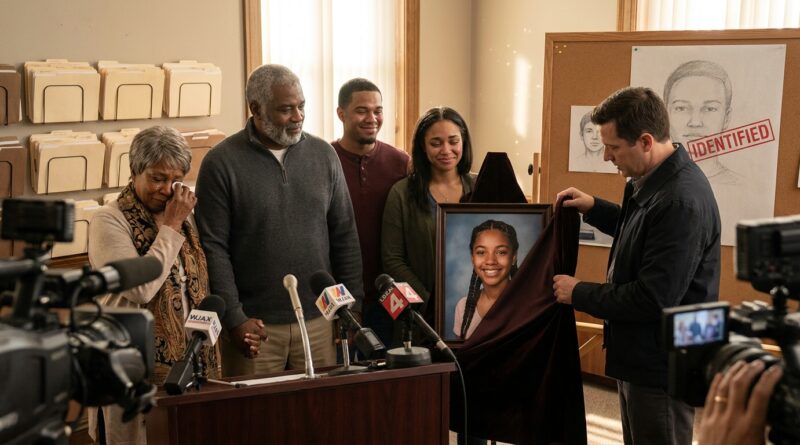
The Woman Who Got Her Name Back After 26 Years: Inside a ‘We Thought She’d Be Lost Forever’ DNA Miracle
Not knowing is its own kind of heartbreak. Families can survive bad news. What often breaks them is no news at all. One more birthday with an empty chair. One more year of asking what happened, where to look, and whether anyone still cares. That is why this cold case miracle DNA Jane Doe finally identified story hits so hard. For 26 years, a young woman found dead in Delaware was known only as “Chelsea Jane Doe.” Her real name, her family, and her history seemed gone for good. Then science caught up with hope. Through modern forensic DNA work and genetic genealogy, investigators were finally able to identify her as Tiffany Bradley. It did not erase the pain. It did give her something priceless back. Her name. And for anyone with a missing loved one, it offered something rare after decades of dead ends. A reason to believe the story may not be over yet.
⚡ In a Hurry? Key Takeaways
- This case was solved after 26 years when advanced DNA testing and genetic genealogy identified “Chelsea Jane Doe” as Tiffany Bradley.
- If your family has a long-cold missing persons case, keep records, stay in touch with investigators, and ask whether forensic genealogy or updated DNA testing is now possible.
- DNA breakthroughs can bring answers, but they also raise privacy and emotional concerns, so families should prepare for both relief and hard new questions.
Why This Story Lands So Deep
Some stories are bigger than crime news. This is one of them.
When a missing person case goes cold, people on the outside often assume the trail is over. The family knows better. They keep living in the question. They replay old phone calls. They second-guess memories. They wonder if one tiny detail could have changed everything.
That is what makes the identification of Tiffany Bradley so powerful. It was not just a technical win. It was the end of 26 years of anonymity for a woman who had been reduced to a placeholder name.
Who Was “Chelsea Jane Doe”?
For decades, investigators knew her only by the name given to unidentified victims in cases like this. “Chelsea Jane Doe” was not who she was. It was a label used because officials had no confirmed identity.
She had been found in 1998 in Delaware. Despite efforts at the time, no one could match her to a missing person with enough certainty to restore her name. That happens more often than most people realize. Records are incomplete. Families move. Tips dry up. Technology hits a wall.
And then the years pile up.
How DNA Finally Broke the Case Open
The old way had limits
Traditional DNA testing is great when police already have someone to compare against. Think of it like trying a key in one known lock. If you do not know which lock matters, you are stuck.
That is where many cold cases stay stuck for years.
The new way casts a wider net
Genetic genealogy works differently. Instead of asking, “Do we have the exact person to compare?” it asks, “Can we find relatives in the family tree?” That opens doors that were shut before.
Investigators can take a DNA sample from unidentified remains, build a profile, and compare it to databases that allow law enforcement use under specific rules. From there, genealogists start building family connections, branch by branch, until one likely identity stands out.
That appears to be what finally happened here. Modern DNA sleuthing helped connect the remains of “Chelsea Jane Doe” to Tiffany Bradley, giving investigators a real person instead of a mystery file.
Why Cases Like This Are Being Solved Now
This is not luck alone. It is a mix of better science, more digital records, and people who refuse to quit.
1. DNA extraction is better than it used to be
Older remains often produce damaged or limited DNA. Labs are now much better at getting usable material from difficult samples.
2. Genealogy tools have changed the game
Family tree research used to take months of courthouse visits and paper trails. Now, much of that work can start online, with databases, archived records, and better matching tools.
3. Cold case teams are revisiting old files
Some agencies are finally reopening cases once seen as hopeless. That matters. A good file review can reveal what was missed, what can be retested, and whether a new lab partner can help.
4. Families kept pushing
This part gets overlooked. Cases often move because someone kept calling, kept asking, kept caring. Persistence is not a side note. Sometimes it is the engine.
What Identification Does, and Does Not, Solve
Getting a name back is huge. It is also only one step.
Identification can answer the most painful basic question. Who was she? But it may leave others open. How did she die? Who was responsible? Why did it take so long? Was she reported missing under another name, in another state, or not at all?
Still, a name changes everything. It allows investigators to rebuild a life instead of examining a stranger. Friends can be found. Family stories can be checked. Last known movements can be traced with fresh eyes.
What Families Can Learn From This Cold Case Miracle
If you have a missing loved one in your own life, this story offers more than comfort. It offers a practical lesson.
Stay organized
Keep photos, dental records, medical details, scars, tattoos, and any DNA sources that may help later. That can include a toothbrush, hairbrush, or close-family DNA reference, depending on what investigators request.
Ask about updated testing
A “no match” from years ago may not mean “no chance” today. Ask law enforcement whether the case qualifies for renewed testing, forensic genealogy, or an updated database entry.
Check that records are still active
It sounds simple, but it matters. Confirm the missing person report is still complete and correctly entered in state and national systems.
Be ready for mixed emotions
Answers are not always tidy. Relief can arrive with grief, anger, or guilt. Families often need support when a long-cold case finally moves.
The Quiet Ethics Question Around DNA Databases
There is also a serious side to these breakthroughs. Genetic genealogy can solve cases, but it also depends on DNA data and family matching. That raises privacy concerns for some people.
The basic issue is easy to understand. One person may upload their DNA for family history reasons, and that choice can help identify a relative, a victim, or even a suspect. Many people see that as a public good. Others worry about consent and scope.
Both concerns are real. The best systems are the ones with clear rules, transparent law enforcement access, and careful case review. Science should help families without becoming careless with personal data.
Why Tiffany Bradley’s Name Matters
A name is not a small thing. It is the difference between being a case and being a person.
Tiffany Bradley was somebody before she was evidence. She had a family line, a childhood, memories, and people who should have had the chance to know where her story ended. That is what this identification restores.
For readers who have watched other Jane Doe and John Doe cases from afar, this one is a reminder that these are not puzzles for entertainment. They are stolen identities waiting to be returned.
At a Glance: Comparison
| Feature/Aspect | Details | Verdict |
|---|---|---|
| Traditional casework | Relies on direct matches, witness tips, and existing records, which often fade over time. | Helpful, but often not enough in decades-old Doe cases. |
| Forensic DNA and genetic genealogy | Uses biological evidence and family-tree matching to identify relatives and narrow identity. | Game-changing when old methods have stalled. |
| Family persistence | Keeps cases visible, records updated, and pressure on agencies to revisit old evidence. | Often the human factor that keeps hope alive long enough for science to catch up. |
Conclusion
Today’s story matters because it proves that even when the trail feels stone cold and the files are turning yellow, love and persistence can still move the unmovable. By unpacking how a young woman known only as “Chelsea Jane Doe” was finally identified as Tiffany Bradley through modern DNA sleuthing, we get something more useful than a feel-good headline. We get a roadmap. Keep the records. Ask about new testing. Do not assume an old dead end is still the end. Faith, science, and stubborn hope do not always win quickly. But sometimes, even after 26 years, they bring someone home by giving her name back.