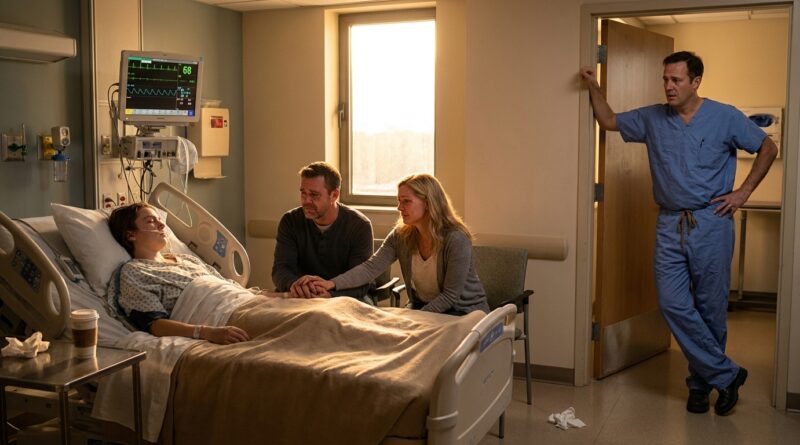
The Boy Who Came Back After 45 Minutes: Inside Doctors’ ‘We Lost Him… Then He Opened His Eyes’ CPR Miracle
That late-night phone call is one of the quiet fears many of us carry around. You hear “cardiac arrest,” “no heartbeat,” or “we did everything we could,” and your mind fills in the rest. That is why stories like this hit so hard. A young patient was reportedly without a sustainable heartbeat, doctors performed prolonged CPR for 45 minutes, and after the kind of moment families never forget, he opened his eyes. It sounds like the sort of headline people scroll past because it feels too dramatic to be real. But in rare, medically documented cases, prolonged resuscitation can lead to survival, especially when the cause is treatable and a team keeps oxygen moving through the body long enough to fix the problem. This is not a promise. It is not something to expect every time. But it is a real life miracle story, and for families sitting in hospital waiting rooms, that difference matters more than words can say.
⚡ In a Hurry? Key Takeaways
- Yes, a patient can sometimes be revived after prolonged CPR, though it is rare and depends heavily on the cause, speed of treatment, and quality of care.
- If you are ever near a cardiac emergency, call emergency services fast and start CPR right away if you are trained or guided to do so.
- Stories like this are hopeful, but they are not a reason to ignore warning signs like chest pain, collapse, seizure-like activity, or trouble breathing.
What Happened in This 45-Minute CPR Miracle Story?
The basic outline is the kind that turns a room silent. A young patient suffered a medical crisis serious enough to stop effective circulation. Doctors and staff began CPR and kept going. Not for a minute or two. For 45 long minutes.
That number matters because most people hear it and assume there could not possibly be a good ending. Families often think that once a monitor goes flat or a doctor says the situation is dire, the story is already over. Usually, sadly, outcomes after cardiac arrest are serious. But “usually” is not the same as “always.”
In this case, prolonged efforts appear to have paid off. The patient was revived. Even more striking, he later opened his eyes, the moment that changes everything for a family that had already begun grieving.
Why This Feels Impossible to Most People
Because movies get it wrong, and real life is much harsher.
On television, CPR is a few hard chest pushes, a shout, maybe a dramatic gasp, and everyone cries with relief. Real CPR is exhausting, physical, and often chaotic. It is done because the brain and organs need blood and oxygen while the team tries to reverse the reason the heart stopped in the first place.
That is the key point. CPR does not magically “restart” a person in the simple way many of us imagine. It buys time. Sometimes just a little. Sometimes, if the cause can be fixed, enough.
How Can Someone Survive After 45 Minutes of CPR?
This is where the medical side matters.
When doctors continue CPR for a long time, they are usually not doing it blindly. They are looking for signs that the patient might still be salvageable. They are asking questions like these:
- Is the person young or otherwise healthy?
- Was CPR started quickly?
- Is the cause reversible, such as a rhythm problem, drowning, electrocution, severe cold exposure, asthma, or a blocked airway?
- Is there enough oxygenation and circulation being maintained to protect the brain?
- Are there signs of response during resuscitation?
In some rare cases, the answer to enough of those questions is yes. That is why prolonged CPR is not automatically pointless. It can be life-saving when the team believes there is still a path back.
It Is Not Just About the Heart
Most people focus on the heartbeat. Doctors think more broadly. They are trying to protect the brain, lungs, kidneys, and every other organ that suffers when circulation stops.
A person can survive a long resuscitation if enough blood flow is maintained and if the underlying problem is fixed in time. That is a huge “if,” but it does happen.
What Doctors Mean When They Say “We Lost Him”
Families often hear phrases like “we lost him,” “no pulse,” or “we are doing all we can,” and it feels final because emotionally, it often is. But in emergency medicine, those words describe the crisis in that moment, not always the final outcome.
When a patient is in cardiac arrest, there may be no effective heartbeat, no normal breathing, and no visible response. From the bedside, it can look like death has already happened. Then a team keeps working. Drugs are given. Airway support continues. Rhythms are checked. CPR goes on. Sometimes there is a return of spontaneous circulation, which means the heart starts pumping blood again on its own.
That return can come after a shockingly long stretch in the right circumstances.
Why Families Hold Onto Stories Like This
Because hope is practical when you are sitting in a plastic chair outside an ICU.
People are tired. Tired of headlines that end badly. Tired of hearing odds, percentages, and timelines that seem to leave no room for surprise. A verified story about a patient revived after 45 minutes of CPR does not erase grief or rewrite medical reality. What it does is cut through that numbness.
It gives people permission to believe that medicine is not always a straight line from bad news to worse news.
What This Story Does Not Mean
It does not mean every cardiac arrest patient can come back after a long resuscitation.
It does not mean families should demand endless CPR in every case.
And it does not mean doctors are wrong when they talk honestly about poor odds.
The truth sits in the middle. This was unusual. Rare. Memorable precisely because it does not happen every day. The miracle is real because the situation was so bleak to begin with.
What Ordinary Families Can Learn From It
You may never be in an ICU during a moment like this. I hope you are not. But there are a few useful, grounded lessons here.
1. Fast action matters
With cardiac arrest, every minute counts. Early CPR by a bystander can keep blood moving until emergency teams arrive. That can be the difference between a tragedy and a slim but real chance.
2. The cause matters
Not all cardiac arrests are the same. Some are much more reversible than others. That is one reason doctors sometimes continue for longer than families expect.
3. Presence matters too
Families often feel helpless at the bedside, but their presence is not nothing. They give history. They make decisions. They advocate. And after the crisis, they are often part of the recovery itself.
4. Hope and realism can live together
You do not have to choose between them. You can understand that the odds are bad and still pray, stay, and believe there may be a turn no one can yet see.
What To Do If You Ever Witness a Cardiac Emergency
This is the part worth keeping simple.
- Call emergency services immediately.
- If the person is not responsive and not breathing normally, start CPR if you know how.
- If an AED is available, use it. The device gives voice instructions.
- Do not stop unless trained responders take over, the person clearly recovers, or you physically cannot continue.
You do not need to be perfect. You just need to start. Waiting for confidence is usually the wrong move.
Why This Story Stays With People
Because it reaches past medicine and into something more human. A family heard the words no one wants to hear. They faced the stillness, the machines, the collapsing timeline of a life they thought they were losing. Then, somehow, there was movement. Eyes opening. Breath. A future returning one fragile second at a time.
That kind of moment does not just change a chart. It changes everyone in the room.
At a Glance: Comparison
| Feature/Aspect | Details | Verdict |
|---|---|---|
| Length of CPR | 45 minutes is far longer than what most people imagine when they think of resuscitation. | Rare, but not impossible in the right medical situation. |
| Chance of Survival | Depends on age, cause of arrest, speed of CPR, hospital response, and whether the cause can be reversed. | Low overall, but meaningful in selected cases. |
| What Families Should Take From It | This is a true hope story, not a guarantee. Early action and steady support still matter. | Hold onto hope, but stay grounded in medical advice. |
Conclusion
Stories like this matter because so many people have been quietly trained to expect the worst. From hospitals. From sudden illness. From life itself. A real life miracle story about a young patient revived after 45 minutes of prolonged CPR breaks through that fog. It reminds us that even when monitors are flat, even when doctors sound defeated, even when a family thinks there is no time left, outcomes can still surprise everyone in the room. No, this does not rewrite medicine. But it does restore something people badly need right now. A reason to keep showing up. A reason to act fast in an emergency. A reason to believe that sometimes, against all expectation, it is not over yet.