The Prayer Circle On Highway 6: How Passing Strangers Turned A Rollover Crash Into A ‘You’re Not Supposed To Be Alive’ Miracle
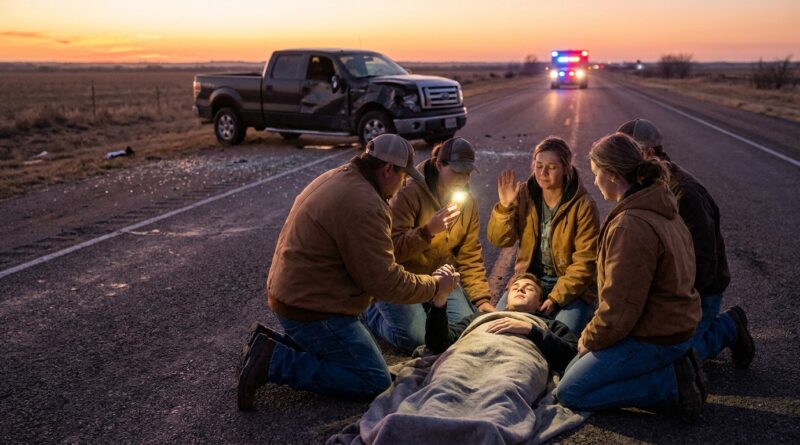
You can only read so many crash alerts, crime clips, and awful headlines before something in you starts asking a hard question. If my worst day came, would anybody actually stop? That is why this Highway 6 story lands so deeply. A 23-year-old man in Texas was trapped after a violent rollover crash that crushed his truck around him. By all logic, this should have turned into one more heartbreaking headline. Instead, strangers pulled over. Not one. Several. They helped steady the scene, stayed with him, prayed over him, and refused to leave him alone until first responders arrived. Later, hospital staff reportedly told his family he was not supposed to survive that impact. Call it a good samaritan highway crash miracle survival story, or just call it proof that human decency is still alive. Either way, it pushes back against that creeping fear that the world has gone cold.
⚡ In a Hurry? Key Takeaways
- This crash story matters because strangers did stop, did help, and may have helped save a young man’s life.
- If you ever witness a wreck, call 911 first, protect the scene if you can do so safely, and stay calm for the injured person.
- The bigger value here is emotional as much as practical. It reminds people that faith, courage, and community still show up in real emergencies.
What Happened on Highway 6
The basic outline is simple, but the emotional punch is not.
A 23-year-old man was involved in a rollover crash on Highway 6 in Texas. The truck was badly damaged, the kind of damage that makes people at the scene go quiet for a second. It was serious. Violent. The sort of wreck where families later say their stomach dropped when they saw the photos.
But before this became a story about loss, it became a story about people.
Passing strangers pulled over and went toward the wreck instead of away from it. They worked to help stabilize the young man as best they could. They stayed there. They prayed around him. And they did not treat him like a problem to film and post. They treated him like a person whose life still mattered in that exact moment.
That detail is what stays with people. Not just that help came, but that care came.
Why This Feels Bigger Than One Crash
Most people are carrying more fear than they admit, especially on the road. Every long drive comes with a quiet mental list. Texting drivers. Speeding trucks. Wet pavement. One wrong second.
And under that is another fear. If something terrible happened, would I be alone?
This story answers that fear in a way statistics cannot. It shows ordinary people stepping into the chaos. No spotlight. No guarantee. Just a decision to help.
For readers worn down by doomscrolling, that matters. It is not blind optimism. It is a real example of bystanders becoming Good Samaritans when it counted most.
The Part People Are Calling a Miracle
Miracle stories can make people cautious, and fair enough. Sometimes the word gets used too easily.
But in this case, the reason people reach for it is clear. Hospital staff reportedly told the family that the young man should not have survived the impact. When medical professionals look at the damage and say, in plain terms, this person was not supposed to be alive, people pay attention.
That does not erase the role of emergency care. It highlights the full chain of survival. The crash happened. Strangers stopped. Help was given fast. First responders took over. Hospital teams did their work. And somehow, against the odds, the young man lived.
Some will call that providence. Some will call it timing. Some will call it both. Most people, whatever they believe, can agree on one thing. It is extraordinary.
What the Prayer Circle Meant
It gave the injured man something more than medical help
When people pray at a crash scene, some readers instantly understand it and some do not. Either way, the act matters. Prayer in a moment like this is not a performance. It is a way of saying, you are not facing this by yourself.
That is powerful for families to hear later. Their son, brother, or friend was not lying there abandoned on the side of the road. He was surrounded.
It also changed the bystanders
There is another side to stories like this. The people who stopped do not drive away unchanged. They saw something awful and chose compassion anyway. That kind of choice leaves a mark in the best way. It reminds them that they are not powerless in a crisis.
What Good Samaritans Actually Do at a Crash Scene
This is where the story becomes useful, not just moving.
If you come upon a crash, the first job is not heroics. It is safety and speed.
1. Call 911 immediately
Even if others are already around, do not assume someone else has called. Give the location, direction of travel, vehicle details, and whether anyone appears trapped or unconscious.
2. Protect the scene if you can do it safely
Turn on hazard lights. Pull over well away from traffic. If it is safe and legal, use your vehicle position to make the crash area more visible. Do not create a second accident.
3. Do not move the injured person unless there is immediate danger
If the car is not on fire and there is no urgent threat, it is usually safer to wait for trained responders. Neck and spinal injuries are a real concern in rollovers.
4. Keep the person calm
Your voice matters. Tell them help is coming. Ask simple questions if they are conscious. Keep them focused and as still as possible.
5. Offer comfort, including prayer if welcome
You do not need perfect words. Calm presence counts. For many people, prayer is part of care. In a crisis, kindness is never a small thing.
Why Stories Like This Spread So Fast
Because people are hungry for evidence.
Not slogans. Not polished inspirational quotes on a sunset background. Evidence that goodness still shows up under pressure.
A good samaritan highway crash miracle survival story travels because it answers something raw in people. It says the road is dangerous, yes. Life can flip in seconds, yes. But it also says strangers still stop. Faith is still spoken out loud. Human beings still rush toward suffering instead of scrolling past it.
What Skeptical Readers Can Still Take From It
You do not have to use the word miracle to feel the weight of this story.
You can simply look at the facts that matter most. A severe rollover happened. A young man was in terrible danger. People who did not know him stopped to help. He survived when survival seemed unlikely.
Even from a strictly practical angle, that is meaningful. Fast bystander action often buys precious minutes. Emotional steadiness can help an injured person hang on. Community is not a soft idea in moments like this. It has real-world effects.
The Quiet Lesson for the Rest of Us
Most of us will never make the evening news for courage. That is probably a good thing.
But we may get one ordinary, terrifying moment where our choice matters. Pull over or keep driving. Call for help or assume someone else did it. Stay present or panic.
This story is a reminder that decency is often very plain. It looks like stopping the car. Walking carefully toward danger. Keeping somebody company in pain. Praying with them. Waiting for the sirens.
At a Glance: Comparison
| Feature/Aspect | Details | Verdict |
|---|---|---|
| Severity of crash | A rollover crash on Highway 6 left a 23-year-old trapped in a heavily crushed truck. | Life-threatening and by all accounts extremely serious. |
| Role of strangers | Anonymous Good Samaritans stopped, helped stabilize the scene, stayed with him, and prayed until emergency crews arrived. | A powerful example of real-world community action. |
| Why people call it a miracle | Hospital staff reportedly told the family he should not have survived the impact. | Whether you use faith language or not, the survival was remarkable. |
Conclusion
This is why the story sticks. It answers two fears most people carry around quietly: that disaster can strike without warning, and that when it does, nobody will come. On Highway 6, people came. They did not know the young man. They were not obligated. They just stopped, helped, prayed, and stayed. Later, when hospital staff said he should not have survived, the whole chain of events took on even more weight. For readers exhausted by the usual flood of violence and despair, this is not just a heartwarming detour. It is a real reminder that ordinary people still step into frightening situations and make a difference. Community still has muscle. Faith still has meaning. And sometimes, on a stretch of highway where everything could have ended, strangers become the reason a family gets one more phone call, one more hug, and one more chance.