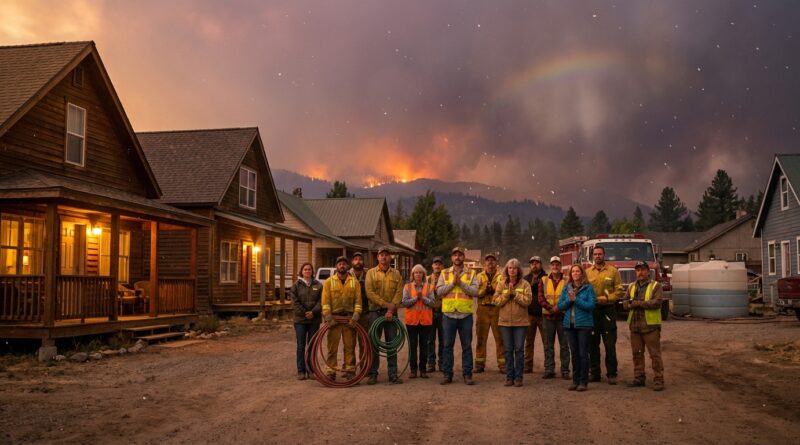
The Night a Town Stopped the Fire: How One Small Community Turned Certain Loss Into a Living Miracle
Some seasons of life feel like a slow drip of bad news. Bills climb, nerves fray, and every headline seems to say something else is falling apart. So when people talk about miracles, it can sound distant, almost like a nice idea meant for somebody else. That is why this real life wildfire miracle survival story hits so hard. In one small town, a fast-moving fire pushed toward homes so quickly that many people believed total loss was only hours away. Families packed cars. Neighbors cried in driveways. A few stayed behind, not because they were fearless, but because they could not bear to do nothing. What followed was not magic in the movie sense. It was grit, timing, prayer, local knowledge, and a string of close calls so narrow that even the people who lived through it still struggle to explain how everything lined up just in time.
⚡ In a Hurry? Key Takeaways
- A small town facing a deadly wildfire avoided the worst through quick thinking, volunteer effort, and a series of last-minute breaks that felt nothing short of miraculous.
- If disaster threatens your area, start with basics now: know evacuation routes, clear brush, keep a go-bag ready, and check on neighbors who may need help.
- The deeper lesson is not to ignore danger. It is that prayer, preparation, and showing up for each other can still change outcomes.
When Loss Felt Certain
The fire did not arrive politely. It came hot, fast, and loud.
By late afternoon, smoke had turned daylight into a strange orange haze. Ash drifted through town like dirty snow. People who had lived there for decades said they had never seen flames move like that. One ridge lit up, then another. Wind pushed sparks ahead of the main fire line, and suddenly the danger was not out there in the hills. It was at the edge of neighborhoods.
Most residents assumed the same thing. We are going to lose this place.
That fear was not dramatic. It was practical. Photo albums. Pets. Medicines. A few clothes. Important papers. People grabbed what they could and prepared to run.
The People Who Stayed and the One Man Who Knew What to Do
Every community has a few people who step forward while everyone else is still trying to process what is happening. In this town, some of them were hesitant volunteers. Not trained heroes. Just ordinary residents with trucks, shovels, water tanks, work gloves, and a hard time walking away.
Then there was a retired firefighter.
He was not there to play action-movie star. He understood the limits. He knew what wildfire can do, and he knew when people should get out. But he also knew the land, the roads, the fuel breaks, the way wind funneled through certain draws, and which homes had at least a fighting chance if the right steps happened fast.
That kind of knowledge matters. A lot.
He helped the volunteers focus on what was possible. Clear this patch. Wet that roof. Move those propane tanks. Watch for embers near the fence line. Keep one road open. Do not waste time on what cannot be saved if it means losing what still can be.
How a Chain of Tiny Decisions Changed Everything
Here is where stories like this get interesting. Not because one giant miracle drops from the sky, but because several small choices begin to stack up.
A delayed wind shift
The forecast suggested the fire would push straight into the heart of town. Instead, the wind wobbled. Not long. Not enough to make anyone feel safe. But enough to buy minutes that turned into action.
A volunteer with the right equipment
One resident happened to have a portable pump and enough hose to reach a cluster of homes many thought were already doomed. That slowed spot fires before they climbed into attics and dry eaves.
A road that stayed open just long enough
Another crew made one final pass down a narrow road, helping an older couple leave and knocking down embers near two sheds. Minutes later, smoke made the route nearly unusable.
A call that almost did not happen
Someone checked on a neighbor who was planning to stay behind alone. That check-in led to extra hands at a key property line, where flames later stopped just short of a row of homes.
Seen one by one, these moments might not sound dramatic. Together, they changed the night.
Why People Called It a Miracle
By morning, many expected to return to ruin. Instead, they found blackened fields, scorched fences, melted mailboxes, and pockets of damage so close to houses that it looked as if the fire had tiptoed around them.
Some homes were singed but standing. Others had decks intact even though brush nearby had burned. In a few places, flames had crossed one side of a property, then died just before reaching the house. Firefighters and residents could explain parts of it. Better prep here. Less fuel there. A lucky break in wind. Hard work in the right place.
But not all of it.
That is what people mean when they tell a real life wildfire miracle survival story. Not that science stopped working. Not that danger was pretend. It means the facts alone do not capture how narrow the escape was, or how many things had to go right in the smallest possible window.
What This Story Gets Right About Hope
Hope is often misunderstood. People act like hope means ignoring reality. It does not.
Real hope looks more like this town. It looks like fear in your chest and movement in your feet. It looks like praying while filling water tanks. It looks like a retired firefighter giving calm instructions while smoke gets thicker. It looks like neighbors checking on each other when every instinct says, save yourself first.
That kind of hope is stubborn. It is practical. And sometimes it helps carry people through impossible nights.
What Ordinary Readers Can Learn From It
You do not need to face a wildfire to take something from this story.
1. Small actions matter more than they seem
Most turnarounds begin before anyone notices them. A phone call. A shared tool. A decision to stay calm. A quick errand for someone who cannot manage on their own. In crisis, little things pile up fast.
2. Community is not a slogan
It is one of the few things that still works exactly the way we hope it does. When people show up for each other, outcomes change. Not always perfectly. But often enough to matter.
3. Preparation is not pessimism
Having a plan does not mean you expect disaster. It means you respect reality. Clear dry brush. Keep insurance papers handy. Save emergency contacts. Charge backup batteries. Make a list of who on your street may need extra help.
4. Prayer and action can live in the same house
For many people in this town, those two things were not in conflict. They prayed, and they hauled hoses. They asked God for help, and they listened for the next wise step. That is not weakness. That is maturity.
If You Are Running on Emotional Fumes
That may be the quiet reason this story lands so deeply. A lot of people are tired in a way sleep does not fix. They are worn down by constant tension, constant expense, constant uncertainty. They do not need fake cheer. They need proof that not every story ends the way it first appears.
This town offers that proof.
Not because everyone got everything they wanted. Not because danger was exaggerated. But because the ending could have been so much worse, and somehow it was not. People acted. Others guided. Timing shifted. Help arrived. Homes stood.
Sometimes that is what a miracle looks like on the ground.
How to Be Part of Someone Else’s Miracle
You may never face a wall of flame. But someone near you is likely facing their own version of it right now.
A medical scare. A job loss. Grief. A family crisis. A season where everything feels one inch from collapse.
You do not have to solve all of it. Start smaller.
- Text the person you keep thinking about.
- Offer a ride, a meal, or an errand.
- Check on the older neighbor during bad weather.
- Learn basic emergency prep for your household.
- Show up before things get dramatic.
Most people who become part of a miracle did not plan to. They just answered the moment in front of them.
At a Glance: Comparison
| Feature/Aspect | Details | Verdict |
|---|---|---|
| What saved the town | Volunteer effort, local fire knowledge, quick decisions, and a few critical breaks in timing and weather | Not luck alone. Human action mattered. |
| Why people call it miraculous | Homes survived despite near-certain expectations of loss and several unbelievably close calls | A fair word for an outcome that defied the odds |
| Lesson for readers | Prepare early, stay connected, pray if that is your practice, and help your neighbors before crisis peaks | Hope works best when it gets its hands dirty |
Conclusion
Right now the world can feel loud with division, disaster, and one more thing going wrong. It is no wonder so many people are quietly running on emotional fumes. That is why this real life wildfire miracle survival story matters. A small town stared at a fast-moving fire, braced for the worst, and still came through with homes standing and neighbors forever changed by what they witnessed. A few reluctant volunteers, a retired firefighter, and a chain of split-second decisions became the difference between heartbreak and relief. If there is a takeaway worth keeping, it is this. You are not powerless. You may not control the wind, but you can still pray, act, prepare, and show up. And on some ordinary day, in some ordinary place, that may be exactly how someone else’s miracle begins.