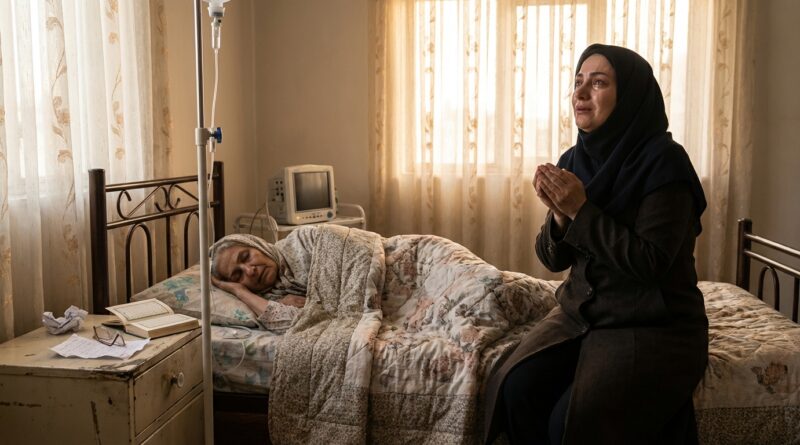
The Mother Who Refused To Say Goodbye: How a Daughter’s Desperate Prayer Saved a Failing Kidney
There is a kind of pain that settles over a hospital room when the doctors have stopped talking about recovery and started talking about comfort. If you have ever watched someone you love fade while machines hum beside the bed, you know how cruel that silence can feel. This real life kidney failure miracle story begins there, in Iran, with a mother whose kidneys had completely failed and a daughter who refused to accept that the last word had already been spoken. She prayed when the numbers were bad. She prayed when the room felt heavy. She prayed when hope looked unreasonable. What happened next is why stories like this matter. Not because they erase grief or replace medical care, but because they remind hurting people that faith does not have to wait for perfect odds. Sometimes it shows up strongest when everything on paper says it should have already given up.
⚡ In a Hurry? Key Takeaways
- This is a real life kidney failure miracle story centered on a mother in Iran whose kidneys had failed and whose condition unexpectedly turned after her daughter’s desperate prayers.
- If you are caring for someone seriously ill, keep doing the practical things. Ask questions, take notes, lean on your faith community, and do not be ashamed to pray boldly.
- Stories like this are meant to encourage, not replace medical treatment. Sudden recoveries are rare, but hope still has a place in the room.
When the worst news keeps coming
Kidney failure is frightening because it changes life fast. One day someone is tired, swollen, weak, and trying to push through. Then suddenly there are test results, urgent decisions, and doctors explaining that the kidneys are no longer doing their job.
For this mother in Iran, it had reached the point families dread most. Her kidneys had completely failed. The medical picture looked grim. The kind of grim that drains the color from a daughter’s face before anyone says the words out loud.
The room itself told the story. The smell of antiseptic. The low mechanical sounds. The dry lips, the still hands, the watchful faces of relatives trying not to break in front of one another. Anyone who has sat through that kind of night knows it can feel endless.
A daughter who would not say goodbye
What makes this story land so hard is that the daughter did not pray from a place of neat certainty. She prayed from desperation. That matters.
There is a version of faith people like to talk about when life is calm. It is tidy, measured, almost polished. But hospital faith is different. It is raw. It is whispered through tears. It is the kind of prayer that says, “God, I do not know what You are doing, but please do not take her from me.”
That was the daughter’s posture. She kept praying when her mother’s body seemed to be shutting down. She kept praying when there was no guarantee that anything would change. She kept praying because love does that. It clings. It asks one more time. Then one more time after that.
Why this part of the story matters
People who are worn down by caregiving often feel embarrassed by hope. They start to think hope is childish, or that prayer is only acceptable if it is restrained and realistic. But this daughter’s example pushes back on that.
You are not foolish for asking for the impossible. You are not weak for crying in a hallway and praying under your breath. You are not naive for believing that God can still enter a room full of bad charts and hard conversations.
The turning point no one expected
Then came the moment that shifted everything.
Against expectations, the mother’s condition began to change. The body that had seemed to be failing started to respond. In a situation defined by shutdown and decline, there were signs of life, function, and movement in the right direction. For a family bracing for loss, that kind of change does not feel small. It feels like air rushing back into the room.
We should be careful here. Not every family gets this turn. Not every prayer is answered in the way people beg for. But that does not make this moment less real for the daughter who saw it happen.
For her, this was not a vague uplift. It was physical. Immediate. Concrete. Before, there had been fear, failing kidneys, and the weight of what seemed final. After, there was a recovery no one had confidently predicted.
What families notice first
In stories like this, loved ones often remember the simplest details. The first stronger breath. A return of color. A hand squeeze. A doctor sounding less guarded. A room that suddenly feels different even before all the explanations catch up.
Those details matter because they are how ordinary people experience extraordinary change. Not as abstract theology, but as moments they can see, hear, and touch.
Faith and medicine are not enemies
One of the healthiest things about a story like this is that it does not force you to choose between prayer and treatment. The family did not stop needing doctors because they believed in God. The machines, the monitoring, the medical team, all of that still mattered.
That is often how real life works. People pray hard and still need skilled care. They trust God and still ask for lab results. They plead for healing and still sit through long medical explanations.
If you are in that place now, let both things be true. Use the help in front of you. Pray with everything you have. Hold the practical and the spiritual together without apology.
That is one reason readers who were moved by transplant stories may also connect with The Father Who Risked the Sea: How a Desperate Journey Turned Into a Miracle Transplant. It carries the same ache many families know well. The point where survival feels uncertain, but love keeps moving anyway.
What this real life kidney failure miracle story says to exhausted caregivers
If you are caring for a parent, spouse, child, or friend with kidney disease, chronic illness, or a frightening diagnosis, this story meets you where you are.
It does not promise that every ending will be the one you want. That would be dishonest. What it offers instead is something quieter and, in some ways, stronger.
It says your prayers still matter even when the medical file looks terrible.
It says love is not irrational just because it refuses to quit.
It says hope can survive one more night.
Practical ways to carry both hope and reality
When a loved one is seriously ill, people often feel scattered. Here are a few simple things that can help:
Keep a notebook. Write down lab terms, doctor updates, medication changes, and questions. Stress makes memory slippery.
Ask one clear question at a time. Families hear more when they slow the conversation down.
Bring in support. A trusted relative, pastor, imam, friend, or community member can help steady you.
Pray specifically. Some people find it grounding to pray for concrete things, strength for the body, wisdom for doctors, peace for the family, and healing if God wills it.
Do not carry shame. If you are tired, angry, numb, or scared, that does not mean you lack faith. It means you are human.
Why stories like this spread so quickly
Because people are hungry for reminders that darkness is not always the end of the story.
Not everyone needs a polished sermon. Sometimes what they need is a mother in a hospital bed, a daughter who would not stop praying, and a recovery that interrupts the expected script. That kind of story reaches people lying awake at 2 a.m. beside a phone. It reaches families waiting for test results. It reaches the person wondering whether they should even bother asking God for one more mercy.
And maybe that is the real gift here. Not just the outcome, but the permission. Permission to keep asking. Permission to keep believing. Permission to stay open to grace even when fear is loud.
At a Glance: Comparison
| Feature/Aspect | Details | Verdict |
|---|---|---|
| Medical outlook before the change | The mother’s kidneys had completely failed, and the family was facing a deeply serious, life-threatening situation. | Bleak on paper |
| Family response | Her daughter kept praying with urgency and refused to emotionally let go even when hope seemed thin. | Raw, resilient faith |
| Takeaway for readers | This story encourages people facing severe illness to hold onto both practical care and spiritual hope. | Deeply encouraging, with needed realism |
Conclusion
Right now the world does feel heavy. Many of our readers are carrying the quiet burden of caring for someone who is seriously ill, or trying to live bravely inside a chronic diagnosis of their own. That is why this real life kidney failure miracle story matters. A devout mother in Iran, kidneys failed, a daughter praying through fear, and a turn no one could force or schedule. It is more than a feel-good headline. It gives you the texture of the struggle before the change, the relief after it, and the honest picture of faith when nothing is guaranteed. If you are exhausted, scared, and wondering whether God still steps into hospital rooms, let this be your gentle reminder. You are not foolish for still praying. You are not strange for still hoping. And sometimes, even in rooms full of bad news, the story is not over yet.