The Father Who Risked the Sea: How a Desperate Journey Turned Into a Miracle Transplant
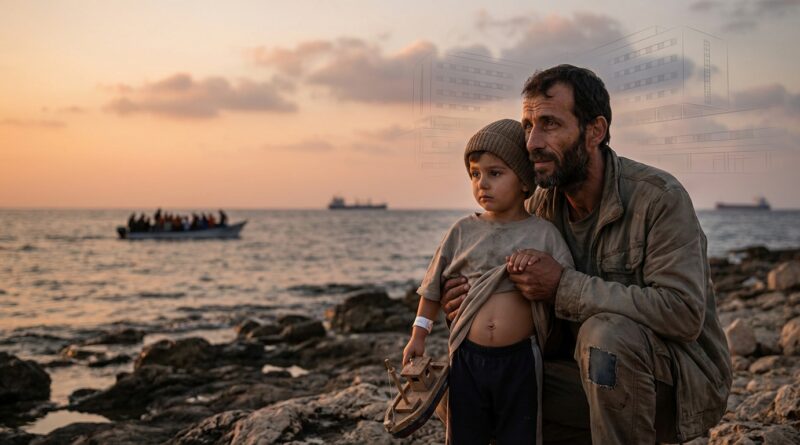
When life gets unfair, a lot of people stop asking for a miracle and start asking a simpler question. Is anybody listening at all? That feeling gets sharper when the problem is medical, the bills are impossible, and every door seems locked unless you have money, papers, or luck. That is what makes this real life miracle kidney transplant refugee story hit so hard. A Syrian father, out of options, spent his last savings to get his sick little boy onto a crowded migrant boat. His son was in kidney failure. Staying put looked like a slow disaster. The sea looked like a fast one. What followed should have been another heartbreaking headline. Instead, after days adrift, rescue crews in Cyprus, doctors, officials, and transplant teams across borders pulled off something almost no one would have dared promise. The child reached Greece and received a rare transplant, becoming one of the youngest patients treated at that center.
⚡ In a Hurry? Key Takeaways
- This is a true story of a Syrian child with kidney failure whose dangerous escape by boat led, against all odds, to rescue and a life-saving transplant in Greece.
- If this story hits home, let it be a reminder to ask one more question, make one more call, and look for one more helper, even when a system feels closed.
- The miracle here was not magic alone. It was courage, timing, medical skill, and people in different countries choosing to care fast.
When a parent runs out of safe choices
There is a point where the word “choice” stops meaning much. If your child is in kidney failure and proper treatment is out of reach, what are you really choosing between? Comfort and risk? No. More like one danger or another.
That was the corner this father found himself in. His son needed care that was not realistically available to him where he was. So he did the kind of thing people do only when desperation has burned away every normal plan. He put his child on a migrant boat and hoped the sea would be kinder than the health system.
It sounds unbearable because it is unbearable. Most parents cannot imagine making that call. But many can understand the feeling behind it. When the people in charge cannot or will not help, families start making impossible math in the dark.
A week at sea that could have ended very differently
The boat was crowded. The trip was dangerous. For days, the family was adrift. That alone could have been the whole story. Too often, it is.
But this time, rescue came. Authorities in Cyprus got involved. The child’s condition was urgent enough that the case did not stop at a dock or vanish into paperwork. It kept moving.
That matters. A lot.
People often think miracles arrive as one giant event. Usually, they show up as a chain. One person notices. Another picks up the phone. A doctor pushes a case forward. An official signs off. A transport gets arranged. A bed opens up at just the right time.
The part that feels almost impossible
Cross-border help actually worked
Here is where the story shifts from survival to something bigger. After the rescue, the child was transferred onward for specialized care in Greece. That kind of coordination is hard even in stable, well-funded systems. Across borders, languages, agencies, and medical teams, it gets even harder.
And yet it happened.
The young boy received a kidney transplant in Greece, in what reports described as one of the rare cases involving such a young patient at that center. Read that again. A child who had been on a migrant boat, drifting toward tragedy, ended up in a transplant unit with a second chance at life.
Why this qualifies as a real miracle for many readers
Some people hear “miracle” and think it means ignoring the human work involved. I do not think that is right. If anything, stories like this show how miracles often travel through ordinary hands.
There was no perfect system here. The route was dangerous. The suffering was real. The family should never have had to gamble like this in the first place. But once the crisis was visible, compassion did not stay theoretical. It turned into rescue, referrals, surgery, and care.
What this story says about hope
The easy version of hope is cheerful and tidy. Real hope is rougher than that. It usually shows up tired, broke, scared, and one step from giving up.
That is why this story lands so deeply right now. Many readers feel trapped by systems they cannot afford or control. Healthcare feels too expensive. Immigration policy feels cold. War feels endless. News alerts train us to expect the worst.
Then a story like this slips through the cracks and reminds us that the world is not made only of broken machinery. There are still hidden rooms where decency is alive. There are still professionals who move fast when a child is in danger. There are still moments when stubborn love meets the right people at the right hour.
What non-techies can take from this, even if the story is not about gadgets
I know this site usually helps people make sense of tech and modern life. But this story fits here too, because so much of life now feels like dealing with systems. Portals. Forms. Waitlists. Borders. Costs. Rules.
And the lesson is surprisingly practical. Systems are real, but they are not always final. Even when a process looks frozen, people inside it can still act. A rescue team can escalate a case. A hospital can coordinate across countries. A specialist can say yes. A network can form around one urgent need.
So if you are carrying your own impossible problem, medical or otherwise, this is not a promise that everything will turn out neatly. It is something more useful than that. It is proof that dead ends are sometimes only dead ends until one human being decides to help.
Why the father’s decision is so hard to judge from a distance
From a safe chair, it is easy to ask why anyone would risk the sea with a sick child. From inside the emergency, the question looks different. Why would a father stay if staying means watching his son fade without treatment?
That does not make the journey safe. It does not make it ideal. It does not erase the danger or the political arguments around migration. But it does force us to face the human core of the story. This was not thrill-seeking. It was triage by a parent who had run out of legal, local, affordable choices.
And that is what turns the headline into something personal. Strip away the geography and many families know the feeling. Maybe not a sea crossing, but the same panic. The same thought. I cannot sit here and do nothing.
At a Glance: Comparison
| Feature/Aspect | Details | Verdict |
|---|---|---|
| Starting point | A Syrian child in kidney failure, with treatment out of reach and a father out of safe options. | Bleak and urgent. |
| Turning point | A dangerous migrant boat journey ended in rescue in Cyprus instead of disaster at sea. | Unexpected break in the story. |
| Outcome | Cross-border medical cooperation led to a rare kidney transplant in Greece for one of the youngest patients treated there. | A genuine reason to believe help can still arrive. |
Conclusion
This story stays with you because it starts where so many people live now, stuck in systems too costly, too slow, or too cold to trust. A Syrian father spent his last savings and put his kidney-failure son on a crowded boat because it was the only path he could see toward treatment. What should have ended in tragedy became something else entirely. After a dangerous week at sea came rescue in Cyprus, fast cooperation across borders, and a rare transplant in Greece that gave a very young child another future. That does not make the world simple or fair. It does remind us that even inside headlines about war, migration, and healthcare collapse, there are still hidden rooms where compassion, timing, and stubborn love can rewrite the ending. If you have been feeling like the world is too broken to help anybody, this real life miracle kidney transplant refugee story offers a hard-earned counterpoint. Hope does not always arrive in perfect conditions. Sometimes it catches up in the middle of the mess, and still gets a child home.