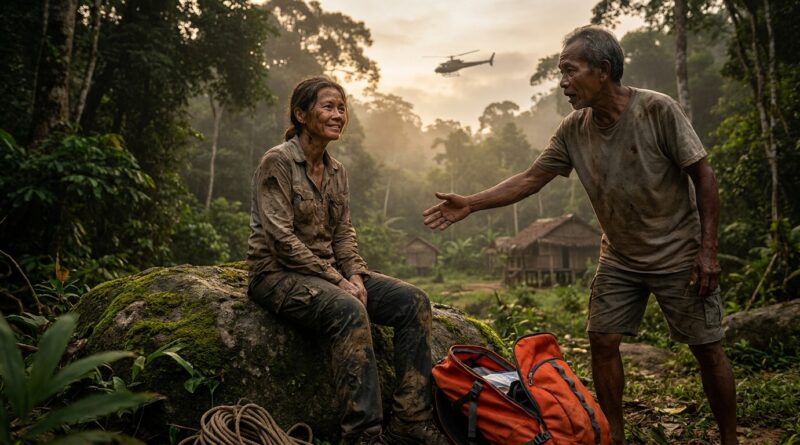
The Hiker Who Survived 14 Days Alone in the Jungle: Inside Jaslinda’s ‘I Refuse To Die Here’ Miracle
Some days life really does feel like a jungle. You keep putting one foot in front of the other, hoping someone notices you are struggling, while the rest of the world moves on. That is part of why Jaslinda Saludin’s story hits so hard. It is not just another shocking headline. It is the kind of real survival story people cling to when they need proof that being lost does not always mean being finished. After going missing on a mountain trail in Malaysia, Jaslinda survived alone in the jungle for 14 days. Search teams looked. Time passed. People feared the worst. Yet she was still out there, still alive, and still refusing to give up. When she was finally found by an Orang Asli villager, her survival felt like a miracle. But it also showed something practical and deeply human. Tiny choices matter. Hope matters. And sometimes rescue comes after the point when everyone thinks it is too late.
⚡ In a Hurry? Key Takeaways
- Jaslinda’s 14 day missing hiker miracle survival story shows that staying alive often comes down to small, stubborn decisions made one day at a time.
- If you ever hike, leave your route with someone, carry a whistle, water gear, and something bright you can use as a signal for help.
- This is not survival entertainment. It is a reminder that people can endure longer than expected, and that search efforts should not lose heart too early.
Why this story feels personal, even if you have never set foot in a jungle
A lot of survival stories get told like action movies. This one should not be.
Jaslinda Saludin’s ordeal matters because it strips survival down to its basics. Hunger. Fear. Isolation. Confusion. The slow grind of another day when you do not know if anyone will find you.
That is why so many people connect with this story. Not because they plan to hike a Malaysian mountain tomorrow, but because they know what it feels like to think, “I cannot stay in this situation much longer,” and then somehow make it through one more day anyway.
What happened to Jaslinda Saludin
Jaslinda went missing after disappearing on a mountain trail in Malaysia. What should have been a normal outing turned into a nightmare. She was separated from safety and ended up alone in dense jungle terrain, one of the hardest places in the world to navigate once you are off track.
Search teams were deployed. Time kept passing. As often happens in missing-person cases, anxiety grew with every hour, then every day. At some point, many people likely feared she had entered what rescuers often call a critical stage.
But Jaslinda stayed alive for 14 days.
That is the part people call miraculous, and honestly, it is. But the better way to understand it is this. A miracle was made up of many tiny acts of endurance. She kept going long enough for someone to find her.
In the end, a single Orang Asli villager spotted her and helped bring the ordeal to a close. That detail matters. Rescue is often not one dramatic helicopter moment. Sometimes it is one observant person who does not look away.
The real lesson in this 14 day missing hiker miracle survival story
1. Survival is usually boring before it is heroic
People imagine survival as bold, movie-like decisions. Real survival is often repetitive and ugly. You try to stay calm. You protect your energy. You look for water. You avoid panic. You keep your mind from racing too far ahead.
That kind of persistence does not look glamorous. It looks stubborn. And stubborn can save your life.
2. Hope is not wishful thinking
Hope gets mocked a lot. But in survival situations, hope is practical. It helps you keep making useful choices instead of shutting down.
“I refuse to die here” is not just a dramatic line. It is a mental tool. It stops the slide into giving up.
3. Searchers matter more than headlines
There is another side to this story. Jaslinda survived because she endured, but also because people kept looking. Search teams, local knowledge, and the determination of ordinary people all played a part.
That is worth remembering in a news cycle that often treats missing people like fading trends.
How she likely stayed alive long enough to be found
Public reports on survival cases do not always include every detail right away, but jungle survival usually comes down to a few basics.
Water first
The human body can last much longer without food than without water. In hot, humid terrain, dehydration is one of the biggest threats. Any access to water, even in rough conditions, can extend survival time in a major way.
Movement, but not blind panic
One of the hardest choices when lost is whether to stay put or keep moving. Panic-driven wandering can make rescue harder. But in some situations, careful movement toward signs of people, trails, or sound can help.
The lesson for the rest of us is simple. If you are lost, do not let fear make every decision for you.
Energy management
You do not survive 14 days by acting like every hour is a sprint. You survive by rationing effort. Rest when needed. Avoid injuries. Keep thinking.
Mental focus
This may be the biggest factor of all. The body follows the mind more than people realize. Once someone decides it is over, their choices often get worse. Once someone decides to keep going, even in small ways, their odds can improve.
What everyday readers can learn from it right now
You do not need to be planning a jungle trek to use this story.
Here are the takeaways that actually matter.
Make yourself easier to find
In the outdoors, that means telling someone your route, expected return time, and backup plan. Carry a charged phone, a whistle, a flashlight, and something bright or reflective. Even a cheap emergency blanket can help with visibility.
Use simple signals
If you are trying to be found, make your presence obvious. Noise helps. Contrast helps. Repetition helps. Three whistle blasts is a classic distress signal. Bright clothing tied high where it can be seen can also help.
Do not wait until you are “expert enough” to prepare
Many people assume bad situations only happen to reckless adventurers. They do not. Ordinary people get lost on familiar trails. Batteries die. Weather changes. One wrong turn becomes many.
Break fear into tiny tasks
This works in the wild and in normal life. Do not focus on surviving 14 days. Focus on the next hour. Find water. Stay warm. Rest. Call out. Try again.
That same approach works when you are overwhelmed at home too. One small useful step beats a huge panic every time.
Why the Orang Asli villager’s role matters
This part of the story should not be treated like a footnote.
The Orang Asli are Indigenous communities in Malaysia with deep knowledge of local land and conditions. In difficult terrain, that kind of lived experience is not extra. It is often essential.
One villager spotting Jaslinda after so many days is a reminder that expertise does not always wear a uniform or come with a press conference. Sometimes the person who can save a life is the one who truly knows the ground beneath their feet.
How to prepare for a hike without turning it into a military exercise
You do not need expensive gear or a survival bunker mindset. You need a few commonsense habits.
Before you go
Tell one trusted person where you are going, what trail you plan to use, and when to worry if you do not return.
What to carry
Bring water, a snack, a whistle, a portable charger, a basic first-aid kit, a flashlight, and a lightweight rain layer. If you can add one more thing, make it something bright that can act as a marker.
What to do if lost
Stop. Breathe. Listen. Check your phone battery before randomly using apps. Look for landmarks. Avoid rushing downhill just because it feels like “progress.” If you decide to stay put, make yourself visible and audible.
What this story says about being “past the critical stage”
One reason this case sticks in people’s minds is that 14 days sounds like beyond the point where survival still feels possible.
That is exactly why it matters.
People are often counted out too early. In rescue work. In illness. In grief. In burnout. In life generally. Jaslinda’s story pushes back against that instinct. It says a person can still be alive, still fighting, still waiting to be seen, long after others start assuming the ending has already been written.
At a Glance: Comparison
| Feature/Aspect | Details | Verdict |
|---|---|---|
| Main survival factor | Mental refusal to give up, plus basic endurance in harsh jungle conditions | Hope was practical, not sentimental |
| Rescue success | Search persistence and the eventual sighting by an Orang Asli villager | Being found often depends on both endurance and other people not quitting |
| Takeaway for readers | Prepare before hikes, carry simple signaling tools, and break crises into small next steps | Useful far beyond the trail |
Conclusion
Today’s feeds are full of bad news and survival content that can feel more like spectacle than substance. Jaslinda Saludin’s real-life 14 day missing hiker miracle survival story offers something better. Yes, it is a jaw-dropping rescue story. But it is also a practical roadmap for anyone who has ever felt forgotten, written off, or pushed past their own so-called critical stage. She kept moving. Other people kept searching. And when hope was running thin, one villager finally saw her. That is the part worth holding onto. Small actions matter. Signals matter. Persistence matters. Sometimes being saved is not instant, dramatic, or neat. Sometimes it comes late. Very late. But this story is proof that late is not the same as never, and lost is not always the end of the story.