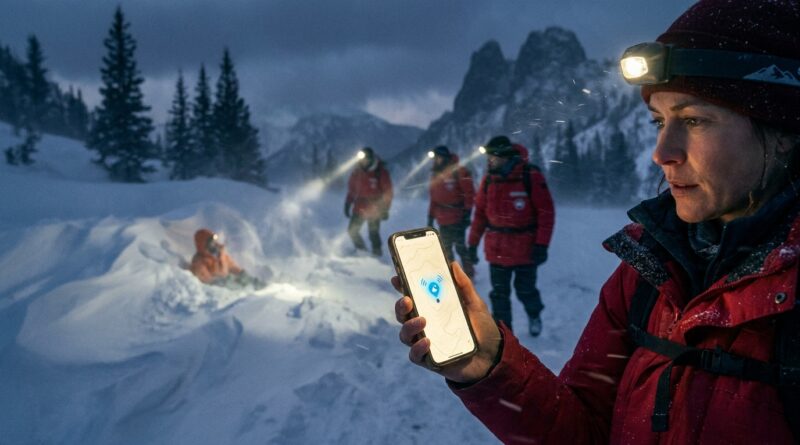
The Wife Who Tracked a Dot on a Screen and Found a ‘Dead’ Man Under the Snow: Inside the Avalanche Miracle Only Technology Could Catch
There is a special kind of fear that shows up when someone you love is out in the world and you cannot reach them. Your mind starts doing the awful math. What if they are hurt? What if no one knows where to look? What if help comes too late? That is what makes this avalanche miracle survival story land so hard. It is not just about snow, skis and a remote mountain. It is about a wife who felt something was wrong, opened a simple phone app, watched a tiny dot on a screen, and would not let that dot become the end of the story. Against the odds, her husband was found alive after being buried under avalanche debris for hours. The miracle here is not only survival. It is that ordinary technology, used by someone who cared enough to act fast, turned a bad feeling into a rescue. And that is something the rest of us can learn from today.
⚡ In a Hurry? Key Takeaways
- A skier survived being buried under avalanche snow for hours after his wife used a phone location app to help rescuers find his last known spot.
- If you travel, hike, ski, or even drive long distances alone, set up location sharing and an emergency plan before you leave.
- Phone tracking is not a replacement for avalanche beacons or proper safety gear, but it can be the extra clue that saves a life when every minute counts.
When a Tiny Dot Becomes Everything
Most of us think of location sharing as a convenience. It helps you see when your spouse is on the way home. It helps you find your teenager at the mall. It helps friends meet up without the usual “I’m by the big sign” nonsense.
Then a story like this comes along and reminds you that the same little dot on a screen can matter in a much bigger way.
In this case, a skier never came back when expected. His wife grew concerned. She did not brush it off. She checked his location through a basic phone app and saw his last known position on the mountain. That information gave rescuers a place to start. Not a vague guess. Not “somewhere out there.” A real point on a map.
That does not guarantee a happy ending. Avalanche rescues are brutal races against time. Survival odds usually drop fast when someone is buried under snow. Which is why this avalanche miracle survival story feels so staggering. By the numbers, the outcome should have been far worse.
Why This Rescue Feels Almost Impossible
Avalanches do not leave much margin for error
Snow is soft when it falls. It is not soft when it settles on top of a buried person. Avalanche debris can pack down like concrete. Victims can be trapped without air pockets. Cold, injury and time all work against them.
That is why experienced backcountry travelers carry avalanche transceivers, probes and shovels, and why they train with them. Rescue teams know this. Skiers know this. Families often know just enough to be scared, but not enough to know what would actually help.
What helped here was not fancy gear alone. It was a chain of small, human decisions. A wife paid attention. She used the tools already on hand. She shared accurate location information. Rescuers followed that lead. And somehow, incredibly, the buried skier was still alive.
Technology did not perform the miracle by itself
This part matters. The phone app was useful, but it was not magic. It worked because someone checked it. It worked because battery life held up long enough. It worked because rescuers were able to act on the information. It worked because love often looks like persistence.
That is the part many people miss when they hear stories like this. Tech is rarely the hero on its own. It is usually the helper. The real engine is a person who refuses to give up.
The Quiet Tech Lesson Hidden Inside the Story
If you strip away the drama, the lesson is surprisingly simple. Everyday tools can become emergency tools if you set them up ahead of time.
That means this story is not just moving. It is practical.
You do not need to be a mountaineer to learn from it. If someone you love hikes, skis, road trips, bikes, fishes alone, or even has a medical condition that worries you, there are a few plain steps worth taking.
1. Turn on location sharing before you need it
Apple’s Find My, Google’s location sharing, and similar apps are easy to ignore until the day they are not. Set them up while everyone is calm. Make sure the right people can see the right device.
Then test it. Open the app. Confirm it updates correctly. Make sure everyone knows how to use it.
2. Do not depend on one tool
Phones lose battery. Signals fail. Weather gets ugly. If someone is heading into risky terrain, location sharing should be the backup, not the whole plan.
For avalanche country, proper safety gear and training still come first. That includes an avalanche beacon, shovel, probe, partner awareness, route planning and checking local avalanche forecasts.
3. Set a check-in time
This is one of the simplest habits and one of the most useful. If your spouse says, “I should be back by 4 p.m., text me if you haven’t heard from me by 4:30,” you have a clear point when concern becomes action.
Without that, people often wait too long because they do not want to overreact.
4. Trust the bad feeling sooner
Not every late arrival is an emergency. But loved ones often know when something feels off. The wife in this story did not dismiss her concern. That matters.
Calm action beats panicked delay.
Why Stories Like This Matter Right Now
People are tired. Tired of headlines that end badly. Tired of feeling like tragedy can appear out of nowhere while we stand there with our hands full of useless little devices.
This story pushes back on that feeling. Not in a cheesy way. In a real way.
A phone app did not stop the avalanche. It did not prevent the accident. But it helped turn helpless waiting into useful action. That is a big emotional difference. It means there was something to do.
If this kind of survival story speaks to you, you may also want to read The Hiker Buried for Hours Who Walked Out Alive: Inside the Avalanche Rescue No One Can Explain. It carries that same mix of harsh reality and stubborn hope.
What Everyday Families Can Do Today
You do not have to overhaul your life after reading an avalanche miracle survival story. Just tighten a few bolts.
Create a simple emergency info habit
Before a trip, share:
- Where you are going
- What route you expect to take
- Who is with you
- When you plan to return
- When someone should worry and call for help
Check your phone settings
Make sure location services are on for the apps you plan to use. Confirm emergency contacts are set. Enable medical ID features if your phone offers them. Keep the device charged, and carry a power bank if you will be out for hours.
Match the tool to the risk
A dog walk in town is not the same as backcountry skiing. For serious wilderness travel, a satellite communicator or emergency beacon may be worth every penny. Phone tracking is helpful, but in remote places it may be incomplete or delayed.
Talk about false alarms now, not later
Some people avoid location sharing because they do not want to seem controlling or anxious. Fair concern. The answer is to talk about intent. This is not about spying. It is about safety, especially during travel or outdoor trips.
Set boundaries. Use it when it makes sense. Turn it off when it does not. The key is agreement, not surveillance.
At a Glance: Comparison
| Feature/Aspect | Details | Verdict |
|---|---|---|
| Phone location sharing | Can show a last known location and give rescuers a starting point if the phone has signal, battery, and permissions enabled. | Very useful as a backup clue, but not enough on its own in high-risk terrain. |
| Avalanche safety gear | Includes beacon, probe, shovel, and training for fast rescue in snow burial situations. | Essential for anyone entering avalanche territory. |
| Family check-in plan | A shared return time, route details, and a clear point when concern turns into action. | Low-tech, easy to set up, and often the fastest way to shorten rescue delays. |
Conclusion
This avalanche miracle survival story stays with you because it sits right where many of us live. We want to believe life is good. We also know terrible things can happen without warning. Here, both truths showed up at once. A man was buried under snow for hours, which should have been the end. It was not. His wife trusted her concern, used a simple app, and helped point rescuers to the place that mattered. That does not erase the danger. It does remind us that love is not always powerless in the face of disaster. Sometimes it looks like checking the phone, making the call, sharing the location and refusing to shrug off that bad feeling. That is the useful part you can carry into your own life today. Set up the app. Make the plan. Have the talk. And leave a little room for hope, because now and then, ordinary people really do get an extraordinary ending.