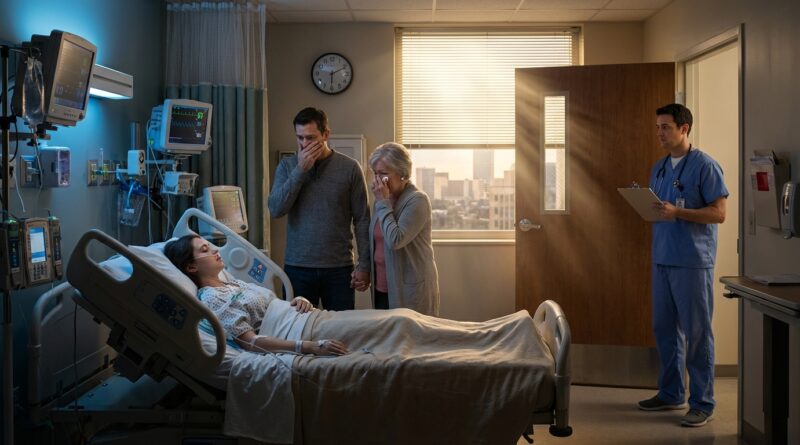
She Woke Up After Being Pronounced Gone: Inside a Modern-Day ‘Came Back to Life’ Miracle
Few headlines pull at the heart like this one. A person is declared gone, the family starts to break, and then somehow that same person opens her eyes again. It sounds impossible. It also hits a nerve because most of us have quietly wondered what really happens in those last, thin moments when doctors say there is nothing more they can do. Is a real life came back to life miracle story actually possible, or are these cases just confusion, bad reporting, or false hope?
Sometimes the answer is more complicated, and more human, than the headline makes it seem. There are rare cases where a patient has no detectable pulse, is declared dead, and then shows signs of life minutes later. Doctors have names for some of these events. Families often call them miracles. Both can be true at once. What matters is looking at one of these stories with clear eyes, respect for medicine, and room for faith. That is where this story lands. Not in fantasy. In that uneasy space where expert care ends, prayer begins, and something no one expected happens anyway.
⚡ In a Hurry? Key Takeaways
- This kind of story can be real, but it is usually tied to a rare medical event, not magic or a simple mistake.
- If you read a “came back to life” account, look for the timeline, what doctors actually observed, and what treatment was given.
- These stories should inspire hope, not replace emergency care or serious medical advice.
What people mean when they say someone “came back to life”
Most of the time, that phrase is not a literal return from days after death. It usually points to a very narrow window after the heart stops, breathing stops, or no pulse can be found. In some rare cases, a person can show signs of life again after resuscitation efforts have ended.
One medical term often brought up is autoresuscitation. Some people know it as the Lazarus phenomenon. It refers to delayed return of circulation after CPR has stopped. It is uncommon, not fully understood, and startling even to trained staff.
That matters because it helps us read these stories more carefully. A real life came back to life miracle story does not have to mean doctors know nothing. It can mean medicine reached its limits, did everything it could, and then something rare happened anyway.
Inside a modern-day miracle story
In the modern cases that stay with families forever, the scene is often painfully ordinary at first. A medical emergency. A crash team. A room full of alarms, instructions, compressions, medications, and then silence. The doctors stop because they have followed protocol and are no longer seeing a response.
That is the moment families remember in slow motion. They pray. They cry. Some leave the room because they cannot bear it. Others stay and keep talking to the person they love.
Then comes the turn. A monitor changes. A breath appears. A pulse is found. Staff rush back into motion. The patient is stabilized, moved, watched closely, and everyone tries to understand what just happened.
For the family, it feels like a miracle because it is. For the medical team, it is also an emergency that now has to be managed fast and carefully. Those two truths can live side by side.
What doctors may have done before the return
In many of these cases, the team has already used the standard tools. CPR. Oxygen support. Defibrillation if the rhythm fits. Emergency drugs. Airway management. Constant monitoring. When they stop, it is not casual. It follows judgment, training, and policy.
That is part of why these stories carry weight. They are not usually about someone being ignored. They are about trained people doing everything they know how to do, and still being surprised.
What the family often brings into the story
Families rarely talk about these moments like a case study. They talk about prayer. They talk about refusing to stop loving. They talk about speaking to a mother, daughter, wife, or sister who seemed already gone. If you are a person of faith, that part will feel deeply familiar.
If you are not, it can still be moving. Love changes the room, even when it does not change the outcome. And sometimes, in stories like this, it seems to arrive just as medicine runs out of words.
Why stories like this spread so fast
Because they press on a fear most of us already carry. We want medicine to be exact. We want a clean line between “there is still time” and “it is over.” Real life is not always that neat.
That is one reason miracle stories travel. They remind us that experts do not control every outcome. They also remind us not to turn one case into a rule. A rare event is still rare.
If you have ever read a story like this and felt both hope and suspicion, that is a healthy reaction. You do not have to pick one side only. You can be grateful, cautious, moved, and curious all at once.
How to read a miracle account without being fooled
Headlines can flatten everything. The better question is not “Did she really die?” shouted across the internet. The better question is, “What exactly happened, and what did the people in the room see?”
Look for the timeline
How long had the person been without a pulse? How long was CPR done? When was death pronounced? How many minutes passed before signs of life returned? Good reporting includes a sequence, not just a dramatic claim.
Look for medical detail
Did the report mention cardiac arrest, resuscitation efforts, monitored rhythms, or delayed return of circulation? Specifics matter. Vague miracle language on its own is not enough.
Look for the aftermath
Did the person recover fully, partially, or only briefly? Some stories are uplifting because someone survives and goes home. Others are still meaningful even if the return was short. Both deserve honesty.
Where faith and medicine meet
This is where many readers live. Not in blind certainty, but in a humble mix of trust, prayer, and hard reality. The doctors are not the villains in these stories. Usually, they are the exhausted people who fought the hardest. The praying family is not irrational. They are doing the one thing left in their power.
When both are honored, the story becomes more believable, not less. It sounds like real life. It sounds like a hospital room. It sounds like grief interrupted by astonishment.
If you are drawn to stories where hope appears in the middle of what looked settled, you may also appreciate The Night a Town Stopped the Fire: How One Small Community Turned Certain Loss Into a Living Miracle. It carries that same feeling many people know well. Everything looked lost, until it did not.
What this kind of story gives readers
It gives language to a private fear. It tells us that even in hospitals full of skill, there are still moments no one can fully predict. That can feel scary at first. Then it can feel strangely comforting.
Why? Because if the line is not as fixed as we thought, then hope has a little more room than we gave it. Not endless room. Not reckless room. Just enough room to keep breathing when the worst news seems final.
That is the real value of a clear, grounded miracle story. Not fantasy. Not denial. Perspective.
At a Glance: Comparison
| Feature/Aspect | Details | Verdict |
|---|---|---|
| What “came back to life” usually means | A rare return of circulation or breathing shortly after resuscitation stops, not a casual misunderstanding days later. | Possible, but uncommon |
| Role of doctors | Medical teams usually followed emergency protocols, used CPR, medication, airway support, and monitoring before pronouncing death. | Critical and often heroic |
| Role of faith and family | Prayer, presence, and emotional support shape how the event is understood and remembered afterward. | Deeply meaningful, even when medicine explains part of it |
Conclusion
Stories like this stay with us because they touch the deepest fear many of us carry. We want to believe modern medicine can fix everything, yet we know it cannot. A level-headed look at a real life came back to life miracle story helps us hold both truths at once. Doctors can do remarkable work. Families can pray through the darkest minute of their lives. And sometimes the line between “over” and “not over yet” is not as fixed as it feels. That does not mean we should believe every dramatic headline. It does mean there is still room for wonder, humility, and hope. In a world that often feels sealed shut by bad news, that small opening matters more than most people admit.