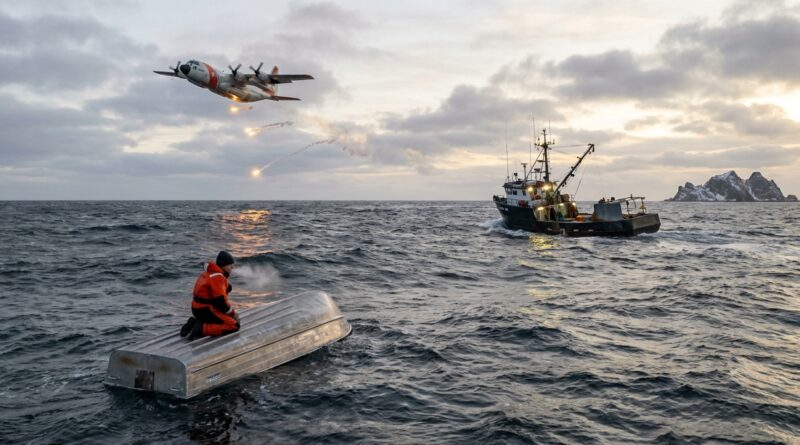
The Teen Who Rode Out a Capsized Boat in Freezing Alaska Waters: Inside a ‘People Don’t Survive This’ Miracle at Sea
Some stories hit a nerve because they sound like the way life feels. Cold. Dark. Too late. No clear rescue in sight. That is why the miracle teen rescued from capsized boat in Alaska story lands so deeply. A 15-year-old boy ended up in brutal Bering Sea conditions after a boat capsized near Alaska, and by every normal measure, he should not have made it. Even seasoned rescuers have said the same thing in plain language. People do not usually survive a night like that in near-freezing water. Yet he did. He held on. Searchers kept looking. And somewhere between human grit and mercy, the ending changed. If you have ever felt like you were clinging to the last piece of hope left, this is not just a sea survival story. It is a reminder that impossible is not always final.
⚡ In a Hurry? Key Takeaways
- A 15-year-old survived a capsized boat accident in freezing Alaska waters by staying with the overturned vessel long enough to be found, despite odds rescuers called nearly impossible.
- When life flips over, the next right move is often small. Hold on, stay visible, conserve strength, and trust that help can come from farther away than you think.
- This story is hopeful, but it is also a real safety lesson. Cold water kills fast, and survival often turns on minutes, gear, location, and people who refuse to quit searching.
What Happened in the Alaska Capsized Boat Rescue
The core of the story is simple, and that is part of why it is so powerful. A teenage boy was caught in one of the harshest survival settings imaginable. The boat he was on capsized in Alaska waters so cold that most experts would tell you the outcome was already written.
Not maybe. Not probably. Written.
Water around 40 degrees can pull heat from the body with frightening speed. Muscles weaken. Thinking gets foggy. Panic burns energy you cannot spare. Even strong adults can lose the ability to help themselves in a short window.
And yet this teen survived through the night.
He reportedly stayed with the overturned boat, which matters more than many people realize. In open water, even a fragile piece of flotation can be the line between life and death. It keeps part of your body out of the water. It makes you easier to spot. It gives your mind one job. Hold on.
Why Rescuers Called It a Miracle
When pilots and rescue crews say, “People don’t survive this,” they are not trying to be dramatic. They are speaking from experience. They have seen what cold water does. They know how quickly darkness, weather, waves, and distance erase options.
That is what makes this a grounded miracle instead of a cartoon version of one. Nothing about the conditions was friendly. Nothing was stacked in his favor. Survival here was not about comfort, certainty, or clean movie-scene heroics. It was about enduring long enough for one break to come.
That matters if you are carrying your own kind of storm right now.
Most of us can believe in rescue in the abstract. It gets harder when you are the one in the water, so to speak, whispering to yourself that people do not survive things like this. That is exactly why stories like this cut through. They answer despair with details.
The Small Decisions That Can Change an Ending
Miracle stories can sound vague if we are not careful. This one is not vague at all. It points to practical choices that mattered.
He stayed with something that floated
This is survival basics, but it is also life basics. Do not let go of the thing keeping you above water just because it is ugly, unstable, or smaller than you hoped. People often survive because they cling to what is available, not to what is ideal.
Searchers kept going
Rescue is rarely a one-person event. Somebody flew. Somebody scanned the water. Somebody made the call to keep looking. Somebody believed there was still a point. If that sounds spiritual, it is. If it sounds practical, it is that too.
He made it one hour at a time
That is often how survival really works. Not with one grand act, but with repeated refusal to quit. One more minute. One more wave. One more patch of darkness. One more hour until the sky changes.
If this story speaks to you, you may also want to read The Teen Who Kept Talking to the Sky: Inside a ‘Three Nights on a Capsized Boat’ Bering Sea Miracle. It carries that same mix of terror, endurance, and stubborn hope that can keep a person breathing when the odds say otherwise.
What 40-Degree Water Really Means
It helps to slow down here, because the phrase “freezing water” can blur into background noise. Forty-degree water is not just uncomfortable. It is dangerous in a way many people underestimate.
Cold shock can hit first. Breathing becomes hard to control. Then swimming ability drops. Hands stop working right. Decision-making suffers. Hypothermia becomes a real threat. This is why experts teach people to stay calm, control breathing if possible, and remain with flotation.
So when a teen survives a capsized boat in Alaska under those conditions, it is not because the danger was exaggerated. It is because the danger was real, and somehow he made it through anyway.
Why This Story Feels Personal Even If You Have Never Seen the Bering Sea
You do not need to know a thing about Alaska fishing waters to understand this story.
You only need to know what it feels like to be tired.
To feel outmatched. To think the numbers do not favor you. To wonder if anyone still sees you. That is why this does not stay on the level of news. It moves into parable. The overturned boat becomes whatever scrap of hope you still have. The search plane becomes the friend, stranger, pastor, spouse, counselor, neighbor, or quiet answer that appears later than you wanted but before it is truly over.
Hope is not always a warm feeling. Sometimes it is cold, stubborn, and exhausted. Sometimes hope looks like hanging on when hanging on is all you can do.
What This Miracle Teen Rescued From Capsized Boat in Alaska Story Teaches Us
1. Survival does not always look strong
We often picture survivors as fearless people making bold moves. Real survival can look small. Shivering. Waiting. Praying. Clinging. Endurance is not glamorous, but it counts.
2. Help may be closer than you think, even when you cannot see it
At night, in bad weather, in cold water, visibility lies to you. The same is true in ordinary life. Just because rescue is not visible yet does not mean the search has stopped.
3. Statistics are not prophecies
The odds were terrible. That is true. But odds describe patterns, not destinies. Every survivor story is a reminder that the worst-case forecast does not get the final word every time.
4. People matter
Behind every rescue is a chain of human beings doing their part. Pilots. Coast Guard crews. Witnesses. Families. Friends. It is a good reminder to be the person who keeps looking, keeps calling, keeps showing up.
At a Glance: Comparison
| Feature/Aspect | Details | Verdict |
|---|---|---|
| Conditions | Nighttime, capsized vessel, Alaska waters near 40 degrees, low survival odds | Extremely dangerous. Rescue crews were right to call survival unlikely. |
| What helped survival | Staying with the overturned boat, conserving enough strength to hold on, ongoing search efforts | Small choices and persistent rescuers can change the outcome. |
| Why the story matters | It offers both practical survival lessons and emotional hope for people facing impossible odds | More than inspiring. It gives people a way to talk about endurance. |
Conclusion
This story matters because a lot of people feel like that boy in the Bering Sea. Exhausted. Out of options. Convinced the conditions are stacked against survival. But the miracle teen rescued from capsized boat in Alaska story reminds us that the end is not always where we think it is. A 15-year-old lived through a night in 40-degree water. A pilot found him even after admitting people do not usually survive those scenarios. That gives us more than a dramatic headline. It gives us a living picture of holding on one more hour, of strangers who refuse to stop searching, and of the small decisions that turn a statistic into a survivor. In a news cycle full of conflict and collapse, this kind of grounded miracle gives us language for hope that is both supernatural and practical. If you are in dark water yourself, take the lesson seriously. Hold on. Stay with what floats. Let people look for you. Impossible is real. So is rescue.