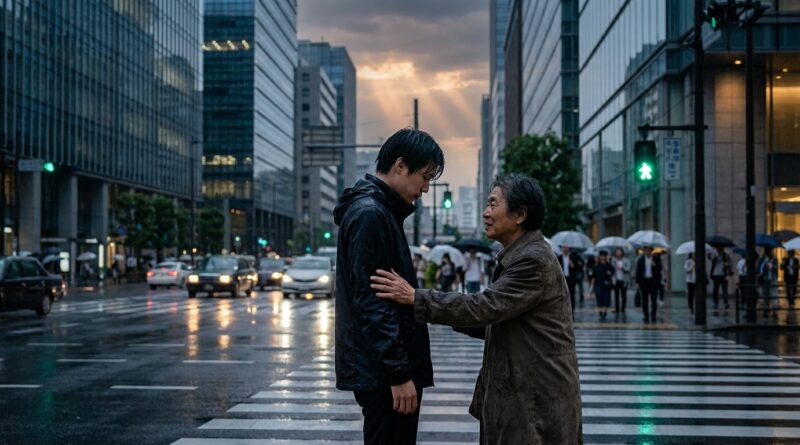
The Stranger At The Crosswalk: How A Chance Encounter Saved A Life
Some mornings feel heavier than they should. You get dressed, grab your keys, and move through the city like a ghost. Plenty of people know that feeling. They go to work, answer texts, smile when needed, and still carry thoughts so dark they scare them. That is what makes this real life miracle story stranger saves someone at the last moment hit so hard. It did not happen in a hospital room or on a stage. It happened at a crosswalk, in the plain middle of an ordinary day, when one person was quietly reaching the end of what they could hold and another person simply noticed.
The stranger did not arrive with a speech, a title, or some perfect plan. Just a pause. A look. A gentle sentence. Sometimes that is all it takes to interrupt a terrible decision long enough for life to re-enter the room. Or in this case, the sidewalk. If you have ever wondered whether kindness still matters when the world feels cold and rushed, this story answers with a quiet but very clear yes.
⚡ In a Hurry? Key Takeaways
- A random stranger’s small, kind interruption can truly save a life in a critical moment.
- If someone looks overwhelmed, make eye contact, speak gently, and ask one simple caring question.
- If you are the one struggling, please tell someone now. A friend, a hotline, a neighbor, or emergency services can help carry this with you.
A City Street Miracle, Not a Movie Scene
What makes stories like this stick is how ordinary they are. No swelling music. No warning sign big enough for everyone else to see. Just a person standing at a crosswalk, looking like any other commuter, while privately fighting a battle that has been building for days, weeks, maybe longer.
That hidden part matters. A lot of people in pain do not look how others expect pain to look. They still buy coffee. They still answer emails. They still pay rent and show up for birthdays. That is why a grounded story like this lands differently from a dramatic testimony or a polished inspirational clip. It feels possible. It feels close.
In this case, the turning point was not huge. It was human. A stranger noticed something was off and chose not to look away.
What Happened at the Crosswalk
Picture the moment. Traffic noise. The light changing. People half-checking their phones. One person standing there with their thoughts spiraling so hard that the next few seconds feel dangerous.
Then someone nearby looks up. Really looks up.
Maybe they noticed tears being held back. Maybe they saw that faraway stare people get when they are no longer fully in the moment. Maybe they just had a gut feeling. Whatever it was, they did the brave thing. They spoke.
The Power of One Gentle Sentence
It probably was not poetic. Most lifesaving words are not. It may have been something as simple as, “Hey, are you okay?” or “You look like you could use a minute.”
That kind of sentence can sound tiny. It is not tiny.
When someone is in a mental health crisis, they are often trapped in a terrible lie that says no one sees them, no one cares, and no one would stop them. A stranger’s voice can break that lie just enough to create space. Space to pause. Space to cry. Space to step back from the edge, literally or emotionally.
Why the Timing Matters So Much
People often survive hard moments not because every problem gets solved at once, but because one moment gets interrupted. The stranger at the crosswalk did not fix the person’s life in sixty seconds. They did something just as important. They helped them live through the next minute.
That is often how rescue begins.
Why This Counts as a Real Miracle
Some people hear the word miracle and think it has to mean something flashy. But many real miracles are quieter than that. They happen when the right person notices at the right time and acts on a nudge they could have ignored.
This is why the phrase real life miracle story stranger saves someone at the last moment rings true. Not because it sounds dramatic, but because it shows how fragile and precious a turning point can be.
A miracle does not always arrive with certainty. Sometimes it arrives wearing a work badge, carrying groceries, and deciding to ask one extra question.
What the Stranger Probably Did Right
If you ever worry about saying the wrong thing, this part matters. Most people do not need a perfect speech. They need presence.
They noticed instead of assuming
It is easy to tell ourselves, “Someone else will handle it,” or “I am probably reading too much into this.” But noticing is the first skill of kindness. It means you let another person’s humanity interrupt your routine.
They kept it simple
You do not need a counseling degree to say, “You do not have to be alone right now.” In fact, simple is often better. It feels real. It feels safe.
They stayed for a beat
A lot of kind words fail because they are tossed out while the speaker keeps walking. The gift here was not just the sentence. It was the pause after it. Staying long enough for the person to answer can make all the difference.
What Readers Can Learn From This
This story is hopeful, but it also gives us something practical. You do not have to be a pastor, therapist, or “expert helper” to matter in a crisis. You just need a little courage and a little attention.
If You Sense Someone Is Not Okay
Try one of these:
- “Hey, do you want to stand over here with me for a second?”
- “You seem upset. Are you safe right now?”
- “Can I call someone for you?”
- “I am here. You do not have to do this alone.”
Notice the pattern. No lectures. No forced positivity. Just calm, direct care.
If You Are the One Barely Holding On
Please do not wait for a dramatic breaking point to get support. Tell one person today that you are not okay. Use plain words. “I am having a hard time and I do not feel safe by myself” is enough.
If you are in immediate danger or thinking of harming yourself, call emergency services now or contact a suicide and crisis hotline in your area right away. If you are in the U.S. or Canada, call or text 988. If you are elsewhere, contact your local emergency number or crisis line now.
Why Small Kindness Still Works in a Burned-Out World
It is easy to feel cynical. We scroll past bad news, sharp opinions, and people performing their lives for strangers. After a while, kindness can start to feel weak or naive.
It is not.
Kindness is often the most practical thing in the room. It slows down panic. It interrupts isolation. It reminds people they are visible. On a city street, at a train platform, in a grocery line, that can be life-saving.
And the best part is that it is portable. You can carry it anywhere. No budget. No platform. No special status required.
What This Story Gets Right About Silent Pain
Many people do not connect with stories that feel polished or far away from regular life. They may be inspired by them, sure, but not always seen by them. A crosswalk story is different.
It says the hurting person might look like your coworker. Your brother. The woman who held the elevator for you. The guy behind you at the pharmacy. It says pain does not always announce itself. It whispers. It hides. It keeps appointments.
That truth can make us softer with each other. It can also make us a little braver.
At a Glance: Comparison
| Feature/Aspect | Details | Verdict |
|---|---|---|
| Type of miracle | A quiet, everyday intervention by a stranger in a public place | Feels believable and deeply relatable |
| What saved the moment | Attention, empathy, and one brave sentence spoken at the right time | Small actions can have huge impact |
| Takeaway for readers | You may need help someday, and you may also be the help someone else needs | Hope here is practical, not distant |
Conclusion
Right now, a lot of people are hurting in silence. They are carrying dark thoughts while still going to work, paying bills, and smiling in photos. That is why a story like this matters so much. It is not flashy. It is not far away. It is a grounded, city-street reminder that hope can arrive through a random stranger’s gentle interruption. It shows that you do not have to be a pastor, a doctor, or a perfect believer to be part of something good that feels almost too timely to explain. You just have to look up, say one brave sentence, and trust that even your smallest kindness might be the thread someone is holding onto. In a lonely, doom-scrolling world, that is not a small thing at all. It may be the difference between a tragic ending and a person getting one more chance to stay.