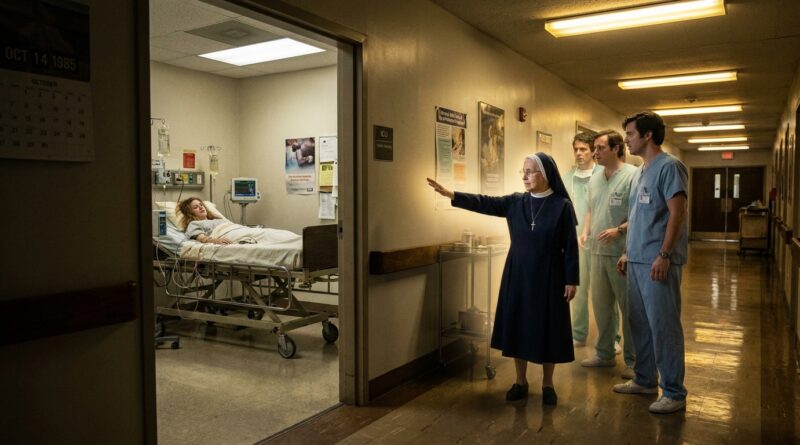
The Nun Who Refused To Let Her Die: Inside an ICU ‘Stroke at 18’ Miracle
One of the scariest thoughts a person can have is not just, “What if I get terribly sick?” It is, “What if nobody believes me when I do?” That fear sits quietly in a lot of people. It shows up before doctor visits, during ER waits, and in the pit of your stomach when symptoms do not fit the neat little boxes others expect. That is why this real life miracle story, where a nun saves a young woman from stroke misdiagnosis, hits so hard. An 18-year-old patient was reportedly brushed off and treated more like a problem than a person. Some assumed drug use. Some looked past the obvious danger. But one nun refused to let that be the end of the story. She pushed. She questioned. She made people act. And that stubborn act of love became the turning point between being dismissed and being saved.
⚡ In a Hurry? Key Takeaways
- This story shows that the “miracle” was not only survival, but also that one determined advocate stopped a deadly stroke from being ignored.
- If something feels wrong in a medical setting, ask direct questions, repeat symptoms clearly, and bring in a trusted person who will speak up if you cannot.
- Stroke can happen to young people too. Never let age or assumptions talk you out of seeking urgent care.
Why This Story Stays With People
Stories like this spread because they touch a nerve. Most of us know what it feels like to be underestimated at least once. Maybe not in an ICU, thank God, but at work, at school, in a family argument, or in a doctor’s office where you leave thinking, “Did they even hear me?”
That is what makes this case more than a dramatic hospital tale. It is about human worth. An 18-year-old in crisis should have set off alarms. Instead, she was reportedly judged through a lazy, dangerous lens. Young. Confused. Must be drugs. It is a shortcut in thinking, and shortcuts can cost lives.
Then came the nun. Not with fancy equipment. Not with a medical degree. With backbone. With moral clarity. With the simple refusal to let a vulnerable person be discarded.
What Actually Makes It Feel Like a Miracle
The mystery part
Any severe stroke in a teenager feels shocking. Most people connect stroke with older adults, not someone who is barely out of high school. So survival alone can feel miraculous, especially if treatment came after a dangerous delay.
The human part
But the more useful lesson is not just “something amazing happened.” It is that a person intervened at the exact moment silence would have been deadly. That matters. A lot.
Miracles, in many real-life stories, do not arrive as movie scenes with bright lights and music. Sometimes they look like one person in sensible shoes saying, “No. Check again.”
The Dangerous Power of Assumptions
Misdiagnosis often starts before any test is run. It starts in the mind. A patient is labeled too fast. Too young for a stroke. Too dramatic. Too anxious. Probably intoxicated. Probably exaggerating.
Once that label sticks, everything else can get filtered through it. Symptoms that should spark urgency suddenly get explained away. That is the quiet danger here.
And to be fair, emergency medicine is messy. Hospitals are crowded. Staff are tired. Doctors and nurses make fast decisions under pressure. But pressure does not erase the harm of bias. It just makes the need for careful listening even more important.
Stroke at 18. Yes, It Can Happen
This is one of the most important practical lessons in the story. Young people can have strokes. It is less common, but it is very real.
That means signs of stroke should always be taken seriously, no matter the patient’s age. Common warning signs can include:
- Sudden weakness or numbness, especially on one side
- Slurred speech or trouble speaking
- Confusion
- Sudden severe headache
- Vision problems
- Trouble walking, dizziness, or loss of balance
A simple memory tool is FAST. Face drooping. Arm weakness. Speech difficulty. Time to call emergency help. It is basic, but basic saves lives.
The Nun’s Real Gift Was Advocacy
It is tempting to tell this as a saintly rescue story and stop there. But if we do that, we miss the part readers can actually use.
The nun’s real gift was advocacy. She stood between a vulnerable person and a system that was not moving fast enough. She made enough noise, asked enough questions, and cared enough to interrupt the usual flow.
That kind of persistence can feel uncomfortable. Many people do not want to seem rude. They do not want to challenge professionals. They do not want to make a scene.
But when the stakes are life and death, “polite” can become a trap.
What You Can Learn From This Without Ever Setting Foot in an ICU
1. Bring a second voice when you can
If you are seriously ill, in pain, confused, or scared, it is harder to explain yourself clearly. A family member, friend, or trusted advocate can notice what you miss and speak when you cannot.
2. Use plain, specific language
Instead of saying “I feel weird,” say “My left arm feels weak,” or “She cannot form a full sentence,” or “This started suddenly 20 minutes ago.” Clear details help people act faster.
3. Ask direct questions
Try: “Could this be a stroke?” “What serious things are you ruling out?” “What signs would mean this is an emergency?” These questions are not disrespectful. They are responsible.
4. Repeat the concern if you are not being heard
You are allowed to say, “I do not think this is being taken seriously enough.” You are allowed to ask for another evaluation.
5. Trust the mismatch
If the explanation you are given does not match what you are seeing, pay attention. Sometimes the body tells a clearer story than first impressions do.
Why Readers See Themselves in This Story
Not everyone will face a stroke. But nearly everyone knows the pain of being misread. That is why this account lands so deeply. It is about the hospital, yes, but it is also about every place where people are quietly sorted into categories and then treated according to those categories.
Unreliable. Overemotional. Too young. Too old. Too poor. Too different. That is the wider wound this story touches.
And the answer offered here is simple, though not easy. See the person in front of you. Fight for them when they cannot fight for themselves.
Faith and Action Worked Together
For many readers, the “miracle” part will be spiritual. A life was spared when the odds looked bad. That response makes sense. But it is also worth noticing that faith here did not look passive.
It had elbows.
It interrupted. It insisted. It demanded care. That is often how love works in the real world. Not just praying from the hallway, though prayer may matter deeply, but also walking up to the desk and saying, “Something is very wrong. Do not ignore her.”
That is a healthy lesson. Belief and action are not opposites. In moments like this, they often walk together.
If You Ever Need to Be “That Person,” Here Is a Simple Script
If a loved one seems to be getting brushed aside, you do not need perfect words. Start here:
- “I am worried this is more serious than it seems.”
- “These symptoms started suddenly.”
- “Can you tell me what dangerous conditions you are ruling out?”
- “I need this concern documented.”
- “Can another clinician evaluate her?”
Calm is good. Clear is better. Persistent is best.
At a Glance: Comparison
| Feature/Aspect | Details | Verdict |
|---|---|---|
| Initial medical response | The young woman was reportedly viewed through assumptions, including suspicion of drug use, instead of urgent stroke evaluation. | A warning sign of how bias can delay lifesaving care. |
| Nun’s intervention | A strong-willed advocate stepped in, challenged the dismissive read, and pushed staff to act. | The turning point of the whole story. |
| Lesson for readers | Advocacy, clear communication, and refusing to be minimized can matter as much as inspiration. | Practical, hopeful, and worth remembering. |
Conclusion
This real life miracle story, where a nun saves a young woman from stroke misdiagnosis, stays with people because it speaks to a fear many rarely say out loud. What if I am suffering and nobody believes me? What if I am reduced to a stereotype at the exact moment I need care? The good news inside this painful story is not just that the young woman survived. It is that one person’s holy stubbornness helped change the outcome. That gives readers something to marvel at, yes, but also something to copy. Speak up. Ask again. Stand beside the person being overlooked. In hospitals, schools, offices, and families, advocacy can feel almost supernatural because it pushes back against the cold drift of indifference. You are allowed to insist on your worth. And sometimes, by insisting on someone else’s, you become the reason their story does not end too soon.