The Horses Who Walked Out of the Inferno: Inside Colorado’s ‘Everything Burned But Them’ Fire Miracle
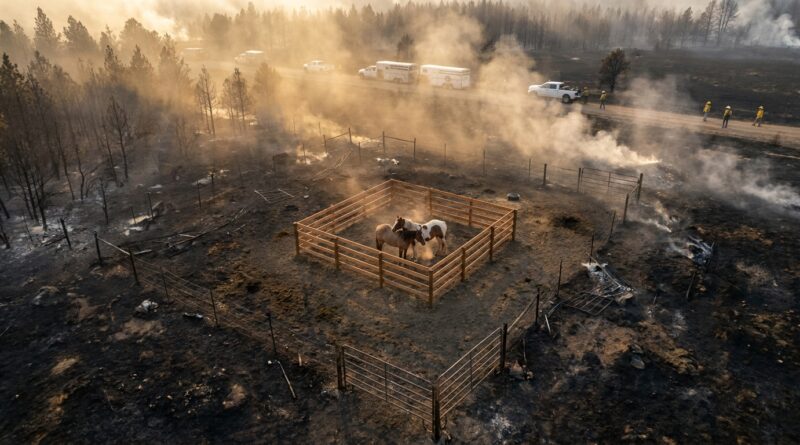
Some days the news feels cruel on a loop. Fires. Floods. Animals trapped in the middle of messes they did not make. After a while, it can start to feel like nothing soft or innocent ever gets spared. That is why this story out of Colorado hits so hard. During the Aspen Acres Fire, rescue teams reached a property that looked completely destroyed. Buildings were gone. The ground was blackened. It was the kind of scene that usually tells you the ending before anyone says a word. And then came the shock. Inside one pen, two horses were still alive. Not only alive, but standing in an area that somehow appeared untouched while almost everything around them had burned. If you have been hungry for one true thing that does not sound fake or polished, this is it. The aspen acres fire animal rescue miracle horses story is not a fantasy. It is a reminder that even in disaster, survival can still show up in ways nobody can neatly explain.
⚡ In a Hurry? Key Takeaways
- Two horses survived the Aspen Acres Fire on a property where nearly everything else had burned, and rescuers found them alive inside an untouched pen.
- If you live in fire country and keep animals, start evacuation planning before peak season. Practice trailer loading, label gates, and keep emergency contacts posted.
- This story matters not just because it is rare, but because it shows how rescue teams, neighbors, and quick action can create real chances for survival.
What happened at the Aspen Acres Fire
The basic facts are simple, and that is part of why the story lands so deeply.
Animal rescue teams arrived at a property hit by the Aspen Acres Fire in Colorado expecting the worst. The fire had torn through the area with the kind of force wildfires are known for. Structures were burned out. The landscape was scorched. By all appearances, the property had been overwhelmed.
But inside one pen were two horses, alive.
Even more startling, the pen itself appeared untouched compared with the destruction around it. That contrast is what made people stop and stare. It was not just that the horses survived. It was where they survived, and how impossible it looked from the outside.
Stories like this spread quickly because they hit a nerve. People are not only reacting to the animals. They are reacting to the feeling that maybe chaos is not the whole story.
Why this feels like a miracle to so many people
Let’s be honest. When people say “miracle,” they do not always mean they are making a scientific claim.
Sometimes they mean this: based on everything visible, this should have ended differently.
That is what makes the aspen acres fire animal rescue miracle horses story so powerful. Wildfires do not usually leave behind neat little islands of mercy. They are fast, hot, and unpredictable. So when rescuers find life standing in the middle of ash, people reach for the only word that feels big enough.
And even if you prefer more grounded language, the emotional truth still holds. This was extraordinary survival.
It pushes back against the numbness
A lot of us have developed a kind of protective numbness. You scroll past one awful headline after another because feeling all of it would be too much. Then a story like this breaks through. Not because it erases the damage, but because it interrupts the assumption that loss is always total.
That interruption matters.
What could explain an untouched pen in a wildfire?
There are a few real-world reasons pockets of survival can happen during major fires.
Wind can shift. Heat can jump unevenly. Fuel sources matter. One area may have dry brush, wooden fencing, and structures that catch quickly, while another spot has less burn material or gets skipped by the main flame front. Firefighters also sometimes create protection zones, whether intentionally or simply by where suppression efforts land at the right moment.
In other words, wildfires are destructive, but they are not tidy.
That does not make the scene less remarkable. If anything, it helps explain why survivors are sometimes found in places that seem impossible. Fire behavior can be brutally inconsistent. One patch is obliterated. Another is spared by inches, timing, terrain, or luck.
Luck is real, but so is preparation
It is tempting to hear a story like this and file it under pure chance. Chance was part of it, almost certainly. But rescue outcomes also improve when people take animal evacuation seriously before smoke is already on the horizon.
That means knowing where your animals can go, keeping halters and leads ready, making sure trailers are usable, and not waiting for the last minute when roads are clogged and visibility is poor.
The part people should not miss: rescue teams still had to go in
One reason this story deserves more than a quick share is that survival did not become meaningful until someone went looking.
Animal rescue work in fire zones is exhausting, dirty, and emotionally punishing. Teams move into places most people are trying to escape. They check wrecked barns, damaged fences, smoke-filled properties, and unstable ground. Sometimes they find loss. Sometimes they find a living animal where no one expected one.
That is what happened here.
The miracle, if you want to call it that, is not only that the horses lived. It is also that people cared enough to reach them.
Regular people change endings
This is the pattern worth holding onto. When neighbors, volunteers, animal control workers, firefighters, and rescue groups move toward danger together, outcomes shift. Not always. Not perfectly. But often enough to matter.
That is a much sturdier kind of hope than wishful thinking.
What animal owners can learn from this right now
If this story hits home for you because you have horses, goats, dogs, cats, or any animal that depends on you, there are practical steps worth taking today.
1. Build a grab-and-go animal plan
Write down where each animal would go if you had to leave fast. Include backup locations. Boarding barns, fairgrounds, friends’ properties, and local emergency shelter sites should all be on that list.
2. Practice loading before there is smoke
A horse that loads well on a calm Saturday is far more likely to load during a fire warning. The same goes for crate-trained pets. Practice matters because panic steals time.
3. Keep ID on everything
Use halter tags, microchips where appropriate, updated photos, and written descriptions. In disasters, reunification gets much easier when identification is clear and current.
4. Post instructions where rescuers can see them
If you are forced to leave, gate signs can help. List the number of animals on site, their names, feeding notes if needed, and emergency contacts. Keep it simple and visible.
5. Do not wait for certainty
Many people lose critical hours because they want one more update, one more forecast, one more sign that danger is “real enough.” If officials are warning early, treat that as your window.
Why stories about animal survival matter so much
Animals cut through our defenses. People who can barely process another disaster headline will stop cold for a horse, a dog, a cat, or a herd being led out of smoke. That is not trivial. It tells us where our tenderness still lives.
And for rescue volunteers, stories like this give language to something they already know. Their work can feel like one emergency after another, with little time to stop and make sense of it. Then a scene like Aspen Acres comes along and reminds them that their effort is not wasted, even when the odds are ugly.
Sometimes they arrive in time to witness the exact thing everyone else had already given up on.
At a Glance: Comparison
| Feature/Aspect | Details | Verdict |
|---|---|---|
| Scale of destruction | The property was reportedly burned out, with widespread visible damage. | Makes the horses’ survival feel genuinely extraordinary. |
| Condition of the horses’ pen | The pen appeared untouched even though surrounding areas had burned. | Strong reason people are calling it a miracle. |
| Big takeaway for readers | Disasters are not always total, and rescue work creates real chances for unlikely survival. | A hopeful story with practical lessons, not just emotion. |
Conclusion
The reason this story stays with people is simple. In the middle of a fire scene that looked like total loss, two horses were found alive in a pen that somehow remained untouched. That does not cancel the devastation of the Aspen Acres Fire. It does something smaller, and maybe more useful. It proves that not everything ends the way it looks like it will. The aspen acres fire animal rescue miracle horses story gives people something they have been short on lately, proof that destruction is not always complete, and that when human beings move toward danger to help, impossible pockets of survival can appear. It also widens the lens on what we mean by rescue and grace. Not just hospital recoveries or dramatic human escapes, but animals too. For horse owners, animal lovers, and worn-out rescue volunteers, that matters. It says your care counts. It says your effort is part of something bigger than one awful day. And sometimes, against every expectation, life is still there waiting to be found.