The Doctor Who Came Home From Ebola: Inside the ‘I Wasn’t Supposed To Survive This’ Miracle
When someone you love is sick on the other side of the world, the usual debates about faith versus science can feel painfully beside the point. You do not care about scoring an argument. You care about one thing. Will they make it home? That is why this american doctor survives ebola miracle story hit so hard. A frontline doctor went into one of the most feared outbreaks on earth, got infected, grew desperately ill, and still walked back through the arrivals gate to his family. For a lot of readers, that feels bigger than a news item. It feels like a lifeline. The story matters because it was not just one dramatic rescue. It was a chain. Skilled medical teams, experimental treatment, strict transport planning, prayer circles, family support, and a patient who kept fighting. If you are exhausted by the false choice between belief and medicine, this story offers something more honest. Sometimes survival looks like both, working at full strength at the same time.
⚡ In a Hurry? Key Takeaways
- An American humanitarian doctor survived Ebola through a mix of rapid evacuation, high-level medical care, experimental treatment, and fierce personal resilience.
- If someone you love is serving far from home, do not wait for a crisis. Build a support plan now for communication, emergency contacts, medical evacuation, and local advocacy.
- This is not proof that every case ends well. Ebola is deadly. The value of this story is that it shows what coordinated care and community support can do under extreme pressure.
Why this story landed so deeply
People are worn out. Worn out by pandemic fear. Worn out by headlines that turn human suffering into numbers. Worn out by the tired claim that faith and science must be enemies.
That is why this recovery story grabbed attention. It gave people something they rarely get in a global health crisis. A face. A family. A return.
The doctor at the center of the story was not chasing headlines. He was doing frontline humanitarian work in an Ebola zone, helping people in the middle of chaos. Then the crisis became personal. He got sick himself.
At that point, the story could easily have ended the way so many others did during Ebola outbreaks. Isolation. Decline. A short update. A memorial statement. Instead, it turned into something far more complicated and, for many people, far more hopeful.
What actually helped him survive
When people call this a miracle, they usually mean something simple. He should have died, but he did not. Fair enough. But if we stop there, we miss the real lesson.
His survival was not magic in the cartoon sense. It was a pileup of hard things going right, often at the last possible moment.
1. He was identified and moved fast
With Ebola, time matters. Early recognition, protective isolation, and quick decisions can change the odds. Once his condition became clear, the effort to get him to advanced care became urgent.
This was not like booking a regular flight home. Medical evacuation for a highly infectious patient takes elite coordination. Aircraft prep. isolation systems. trained personnel. hospital readiness. government clearance. Every part has to line up.
2. He reached a hospital equipped for the worst
Not every hospital can safely treat Ebola. Specialized units do more than protect staff. They can deliver aggressive supportive care without losing precious time to confusion or fear.
That includes fluids, electrolyte management, oxygen support, close monitoring, and constant infection control. It sounds plain, but supportive care is often the difference between life and death in severe infectious disease.
3. Experimental treatment played a part
At the time, experimental therapies were drawing intense attention. Some patients received investigational drugs or blood-based approaches. The public often focuses on the dramatic part, the “secret serum” angle, but experimental medicine is rarely a single silver bullet.
Think of it more like adding one more tool when every tool matters. The treatment may help. The nursing care may help. Hydration may help. Timing may help. The patient’s baseline health may help. Survival is often the result of the whole mix, not one hero ingredient.
4. He had a community carrying him
This is the part skeptics sometimes skip too quickly. Family support, prayer networks, and a public rooting for someone do not replace medicine. They can, however, steady the people making impossible choices and strengthen the patient at a time when mental endurance counts.
Faith, in stories like this, was not used instead of treatment. It was used to endure treatment, to keep hope alive, and to hold a family together while experts did their work.
Faith and science were not fighting here
That may be the most useful thing about this american doctor survives ebola miracle story. It breaks a lazy narrative.
The doctors and nurses were not less scientific because people were praying. The family was not anti-medicine because they believed God could help. Both tracks ran together.
That matters for ordinary families. When a loved one is critically ill, people often feel pushed into weird camps. If they trust medicine, they worry they are losing faith. If they talk about prayer, they worry they will sound naive. Real life is rarely that neat.
In a crisis, wise people usually use every honest help available. They call specialists. They ask hard questions. They gather records. They rest when they can. They pray if that is part of their life. None of this is a contradiction.
What made this more than a feel-good headline
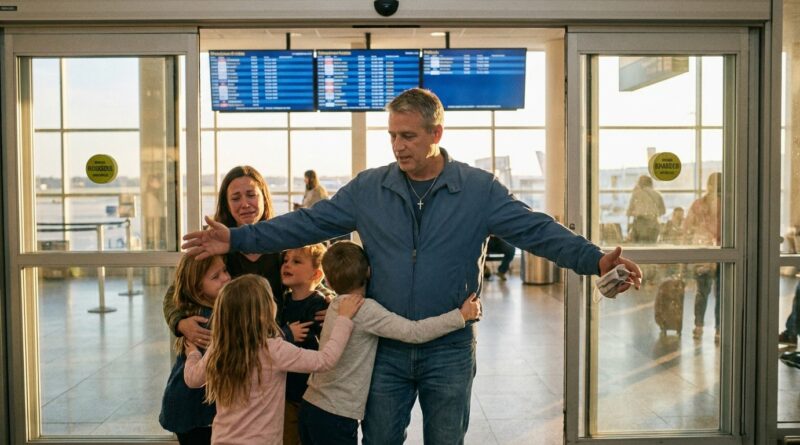
A homecoming story can get flattened into sentiment. Family hugs. airport photos. everyone cries. roll credits.
But what gave this story weight was the cost behind it. Ebola does not just threaten one body. It strains systems, relationships, morale, and public trust. For humanitarian workers, it also raises an uncomfortable question. Is the sacrifice worth it?
That question does not have a cheap answer. Some people do not come home. Some families carry losses that never make international news. So when one doctor survives and returns, the moment carries joy and grief at the same time.
It is hope, but not denial. That is why it resonates.
A practical roadmap for families with loved ones serving far from home
If this story stirred up your own fears, that is not overreaction. It is recognition. A lot of families have someone overseas in medical work, missions, aid work, military service, or disaster response. The best time to prepare is before the phone call comes.
Build an emergency information packet
Keep the basics in one place. Full legal name. passport details. employer or mission organization. local contacts. supervising physician if there is one. insurance information. evacuation provider. allergies. regular medications. emergency consent forms.
Do not assume you can piece this together while panicking.
Know who actually has authority
In a cross-border crisis, confusion kills time. Find out who makes transport decisions, who can speak to hospitals, who can release updates, and who can act for the family if the patient cannot communicate.
Set communication expectations early
If your loved one serves in a high-risk zone, discuss this before deployment. How often will they check in? What happens if they go silent? Who contacts whom if they are hospitalized?
Silence is always scarier when there is no plan around it.
Use community support well
Prayer chains, meal trains, group updates, childcare help, fundraising, and travel support can be a huge relief. But someone needs to coordinate it. Pick one point person. That keeps the family from answering the same painful questions fifty times a day.
Ask better medical questions
When a loved one is critically ill, families often get overwhelmed by jargon. Start with plain questions.
What is the diagnosis? What is being done today? What are the biggest risks right now? What signs would count as improvement? Is transfer being considered? What support does the family need to arrange?
You do not need to sound like a doctor to get useful answers.
Why people called it a miracle
The word “miracle” can make some readers nervous. They hear it as a rejection of facts. But many families use the word differently. They use it because the facts were terrible, and yet the person lived.
In that sense, miracle language is often emotional shorthand. It means the odds looked awful. It means many pieces had to line up. It means gratitude overflowed the medical chart.
You do not have to strip away the science to understand that feeling. In fact, sometimes the science makes the survival feel even more astonishing.
The bigger lesson for today’s pandemic fears
Even if Ebola feels far away, the emotional shape of this story is familiar now. We have all seen how fast infection can rearrange a life. We have all learned that outbreaks are not abstract. They travel through airports, workplaces, churches, schools, and homes.
That is why this story still speaks so clearly. It reminds readers that fear should not get the last word. Preparation matters. Expertise matters. Courage matters. Community matters.
And yes, for many families, prayer matters too.
At a Glance: Comparison
| Feature/Aspect | Details | Verdict |
|---|---|---|
| Medical response | Rapid isolation, specialized transport, advanced hospital care, and close supportive treatment all played key roles. | Essential. Survival rarely happens without this level of coordination. |
| Experimental treatment | Investigational therapies may have improved the odds, but they were part of a wider treatment picture, not the whole story. | Promising, but best understood as one piece of the puzzle. |
| Faith and community support | Prayer, family support, and public encouragement helped sustain hope and decision-making during a brutal crisis. | Powerful support layer. Not a replacement for care, but often a real source of strength. |
Conclusion
This story matters because it refuses the easy, cynical take. A frontline humanitarian doctor surviving Ebola and flying home to his family speaks straight into modern fears about pandemics, long-distance missions, and whether sacrifice is worth it. The answer is not simple, but the picture is clear. Recovery came through expert care, relentless effort, experimental help, and a community that would not let go. For readers watching someone they love serve far from home, that is more than inspiration. It is a working model. Prepare well. Ask good questions. Accept help. Hold onto faith if it is yours. And remember that sometimes the person everyone feared they would lose really does walk back through the gate.